
Open or Closed
Introduction to the Letter to the Galatians

Dear Friends of the Pilgrim Letter,
A few nights ago, Kay and I watched the 1995 Rob Reiner film The American President, starring Michael Douglas, as a widower president, Martin Sheen, as the Chief of Staff, Michael J. Fox, as the President’s Assistant for Domestic Policy, and Annette Bening, as the president’s girlfriend. I was repeatedly moved by the obvious respect Reiner held for the presidential office and the noble manner with which Michael Douglas carried out his part. In regard to that, I learned that Robert Redford declined the part because he thought the script should magnify the romantic elements of the film over the role of the presidency.
Reiner’s emphasis is demonstrated most poignantly in a line, delivered not by Douglas, but by Annette Bening, who, during a quiet moment at Camp David, asks the president, “How do you have patience for people who claim they love America, but clearly can’t stand Americans?” Sitting on the sofa next to Kay, I could not help but think that at this moment in our nation Bening’s question is far more appropriate than it was thirty-one years ago in 1995. Flag-waving and sloganeering greet us at street corners, supermarkets, and parade across our television screens, yet we are not seeing much love extended to our citizens these days. Deep cuts to medical and food programs, protections lifted for clean air and water, brutal — even deadly — martial tactics directed at citizens and guests in our cities, and a major war begun in the Middle East without a single word to Congress represent a blatant disregard for Americans. No amount of rationalization could lead Bible-reading Christians to condone these love-less actions.
In this week’s Letter, I direct our attention to censorship and the suppression of information by the administration and some state governments. In the public education arena, my own state of Texas has become increasingly repressive, especially in its frenzy to ban library books. Do we suddenly find ourselves at a “Fahrenheit 451” moment? If you recall, Ray Bradbury’s 1953 novel depicts a future American society where books are outlawed and where the nation’s firemen no longer prioritize safety but instead burn every book they find. “451° Fahrenheit,” Bradbury’s strange title for his book, is the temperature at which book paper spontaneously burns to ash.
Bradbury’s “burning questions” include: How can our citizenry be truly free if we block their access to knowledge — even knowledge which challenges the status quo? More importantly, Bradbury’s novel begs the question if governmental leaders truly love the people, why would they actively keep information and knowledge from them? Can a government serve the citizens while at the same time curtailing their freedom?
With this growing challenge in mind, I could not help but realize that Paul’s Letter to the Galatians is “ignited” by an attempt at censorship. Paul’s critics want to silence him. In particular, they wish to suppress his message to the Galatians of their incredible freedom in Christ.
Thank you for joining me on the Greatest Adventure, Patrick
BOOK FAIR OR BOOK SCARE?
Last school year, various Texas school boards across the state banned 540 books. Some of the most notable titles include A Clockwork Orange, by Anthony Burgess (which I read in sophomore English); The Color Purple, by Alice Walker; Looking for Alaska, by John Green (a young adult title that I recently read and reviewed); and The Bluest Eye, by Toni Morrison. The school district just north of where I live in San Antonio has pulled for review both Brave New World, by Aldous Huxley and A Streetcar Named Desire, by Tennessee Williams — both texts I was assigned in high school in 1971, a year when young Americans joined massive anti-government protests across the land, resulting in 12,000 arrests. Now with the passage of Texas Senate Bill 13 this month, which gives parents ever greater control over book censorship in schools, expect the list of banned books to grow exponentially. In fact, the aforementioned school district has temporarily closed all of its secondary school libraries to consider the appropriateness of 195,000 texts. The libraries serve approximately 3,120 students on their middle and high school campuses. Adding insult to injury, this school district along with some others are using AI tools to scan texts for objectionable material. Rather than depending on knowledgeable, mature readers to make reasonable recommendations, the state districts have turned to machines. About this method, Laney Hawes, an activist with the Texas Freedom to Read Project, retorts, “AI doesn’t fully understand the community, Books and stories are all about the human experience. Isn’t that the point of books? (Price, Library Journal)
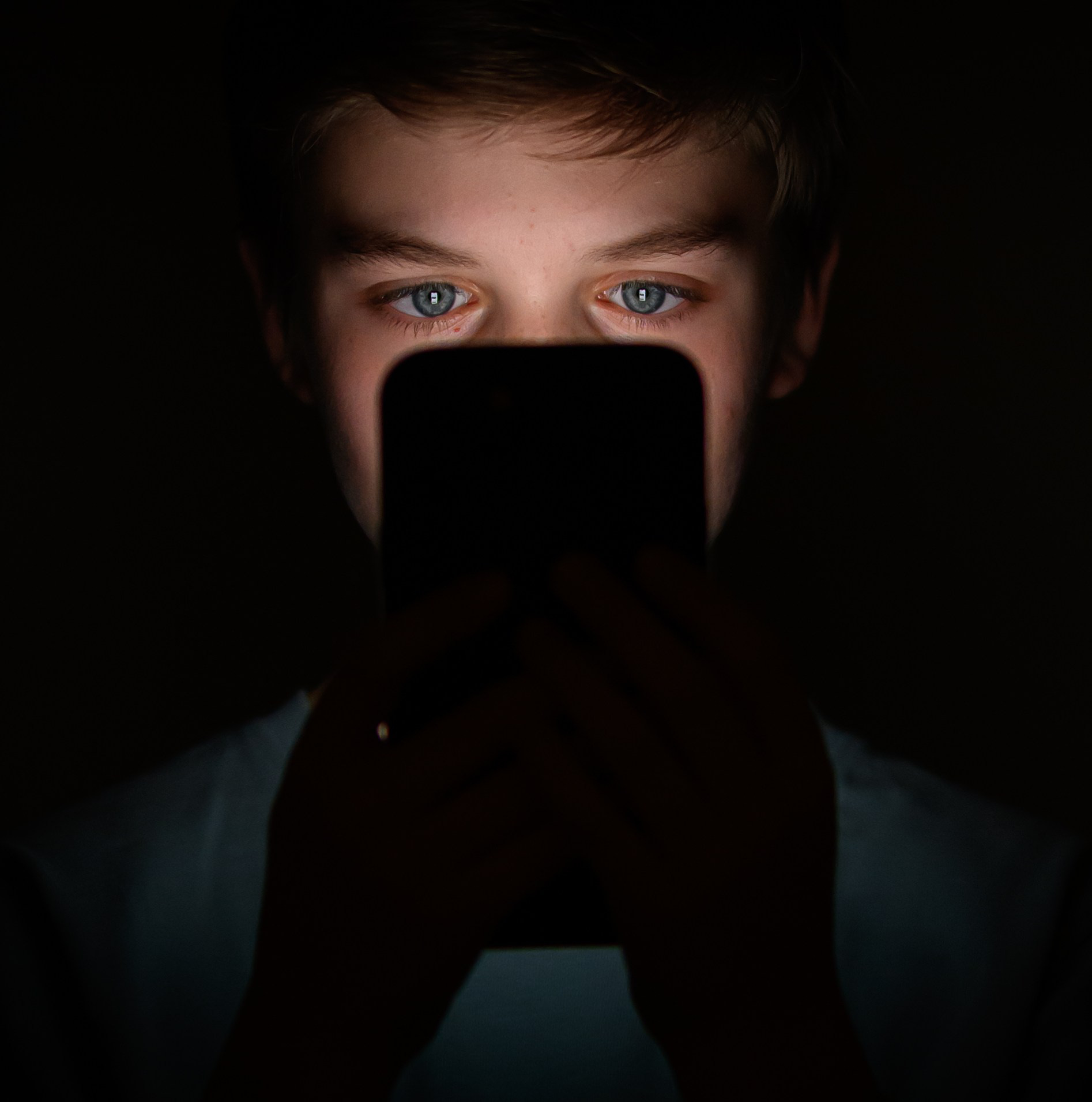
These emotionally charged bouts of censorship weaken the education Texas students receive. They will certainly be less challenged. Most of the book titles that have been removed deal in some way with sexual issues or with America’s racial and civil rights history. Do we really imagine that teenagers are not grappling with their own sexual awakenings and the confounding questions those awakenings bring about? Have we conveniently forgotten the challenges of our own adolescence? Do we want to exchange what may well be a reasoned, developed, and personal approach to sexuality offered in a book for the ribald, hedonistic, and altogether impersonal versions of sex hawked on the internet? Regarding the latter, in 2022, the American College of Pediatricians reported that 54% of American adolescents had watched online pornography by age thirteen. 39% of boys and 23% of girls had viewed scenes of sexual bondage. Those percentages have surely increased during the last four years, while the ages of children viewing these online sites have no doubt markedly decreased. (Pornography, College of Pediatricians)
At the same time, what benefit is it to “whitewash” America’s most enduring sin of racial injustice? Why do we want our children shielded from the dehumanizing struggle of 23 million of our nation’s citizens and the heroism of those who sacrificially worked for equality and civil rights? As we approach the 250th anniversary of our nation, do we want the next generation of Americans to live up to the words of the Declaration of Independence or discard the document’s message as outdated nostalgia?
To make a purely practical point, if a son or daughter brings home a book that contains sexual themes or historical violence, parents can engage that material with their child and have substantive conversations. On the other hand, junior’s internet viewing will be solely secretive, and the confusing or even disturbing scenes he or she views will certainly not be shared but insufferably internalized.
Texas is facing challenges in higher education, as well. Texas A&M University, with its 75,000 students, has the largest student body of any single campus in the U.S. The university has been the focus of national news by canceling six courses and substantially modifying hundreds of others this academic year — both at the undergraduate and graduate levels. The university incited near ridicule by restricting the teaching of Plato’s Symposium in at least one course. Administrators deemed its discussions on gender and sexuality in conflict with state-backed policies banning “race and gender ideology.” A professor was instructed to remove the text. Written in 385 BC the Symposium is hardly salacious fare. It is ironic that the philosopher who introduced the world to ethics and educational ideals is being censored by an institution of higher learning — one built upon Plato’s legacy. On the other hand, it is laughable that we fear disturbing individuals in their twenties by challenging information about human sexuality. Are these absurd restrictions about students or peacock politicians? The American Association of University Professors responded to A&M’s administration critically and cogently:
Silencing 2,500-year-old ideas from one of the world’s most influential thinkers betrays the mission of higher education and denies students the opportunity to engage critically with the foundations of Western thought. A research university that censors Plato abandons its obligation to truth, inquiry, and the public trust—and should not be regarded as a serious institution of higher learning. We are deeply saddened to witness the decline of one of Texas’s great universities. (AAUP-TAMU Chapter & Blinder, NY Times)
Worlds apart
When did we go from treasuring books and the knowledge they impart and imagination they awaken to fearing them? Hope in this matter has sprung up in the most unexpected place — Damascus, Syria. Sitting on the same latitude as Dallas, TX, yet 6,958 miles to the east, Syrians are in love with books. On February 5, opening day for the 57th Damascus International Book Fair, 250,000 visitors streamed into the city’s International Convention Center under a banner that read, “History We Write - History We Read.” 500 publishing houses from thirty-five different countries were represented at the ten day festival. Remarkably, Charles Darwin’s On Origin of Species was available, along with Stephen Hawking’s A Brief History of Time, The Theory of Everything, and The Grand Design. Also on the shelves were provocative romantic selections by the Irish writer, Sally Rooney, to include Normal People, Intermezzo, and Conversations with Friends. Each title had been translated into Arabic.
After fifty-four years of repressive, authoritarian rule under Hafez al-Assad and his son Bashar al-Assad as well as thirteen years of brutal civil war, Syrians are hungry for free expression and access to knowledge — even knowledge that rattles their Islamic worldview. Most surprisingly, many titles at the book fair were made available in the Kurdish language. The Assads persecuted the Kurdish minority in Syria for decades through structural discrimination, denial of citizenship, and violent crackdowns. So far, the new administration is allowing this freedom. The people seem determined to keep it that way. (Book fair, The Economist)
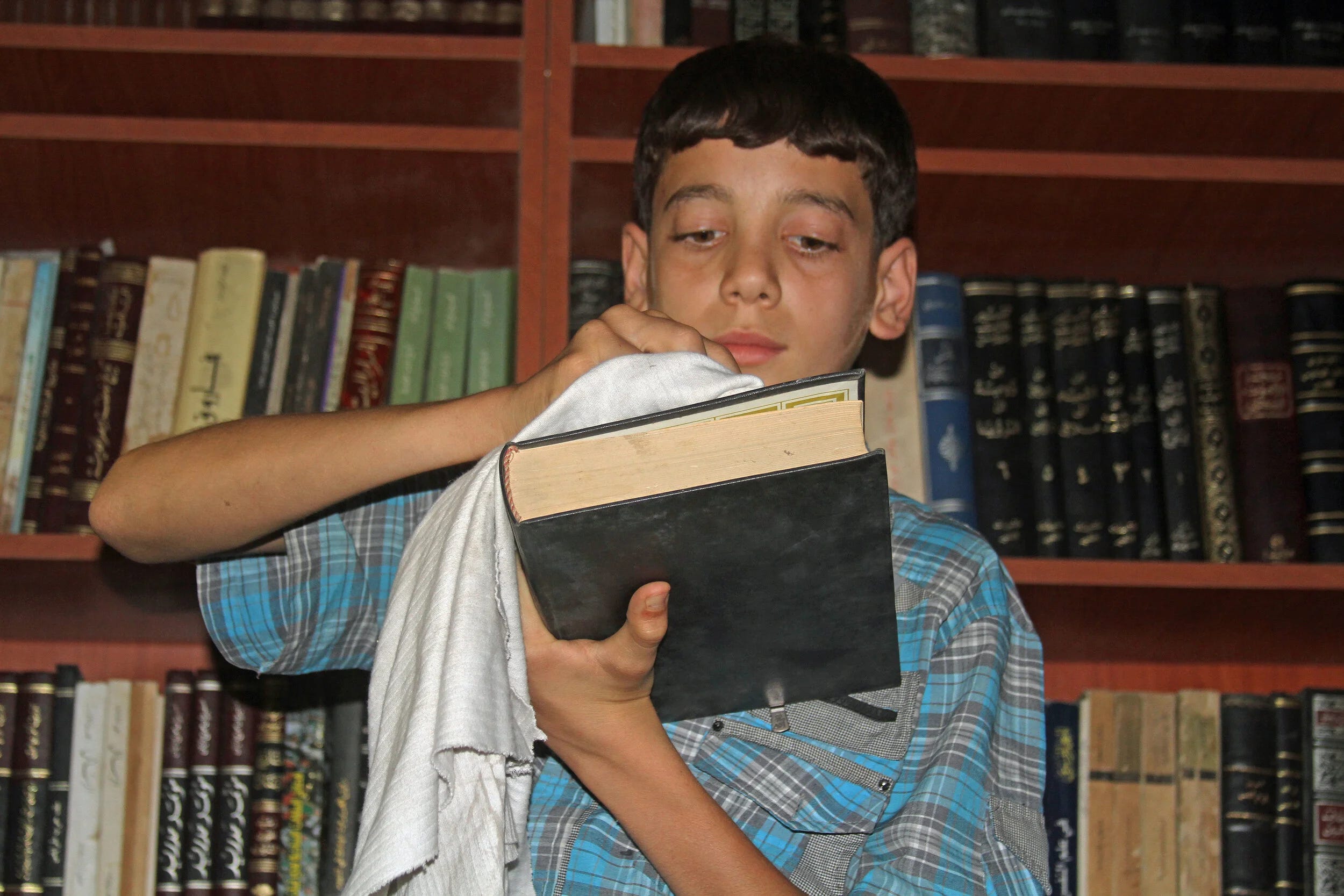
Quite by chance, I am reading Syria’s Secret Library, by the British foreign correspondent Mike Thompson. The book records the heroic efforts of several young men, college age and younger, who establish a library in their besieged city of Daraya, situated about five miles southwest of Damascus. The youngest of their number, Amjad, a fourteen year-old with an all-consuming passion for books and learning, served as the Head Librarian.
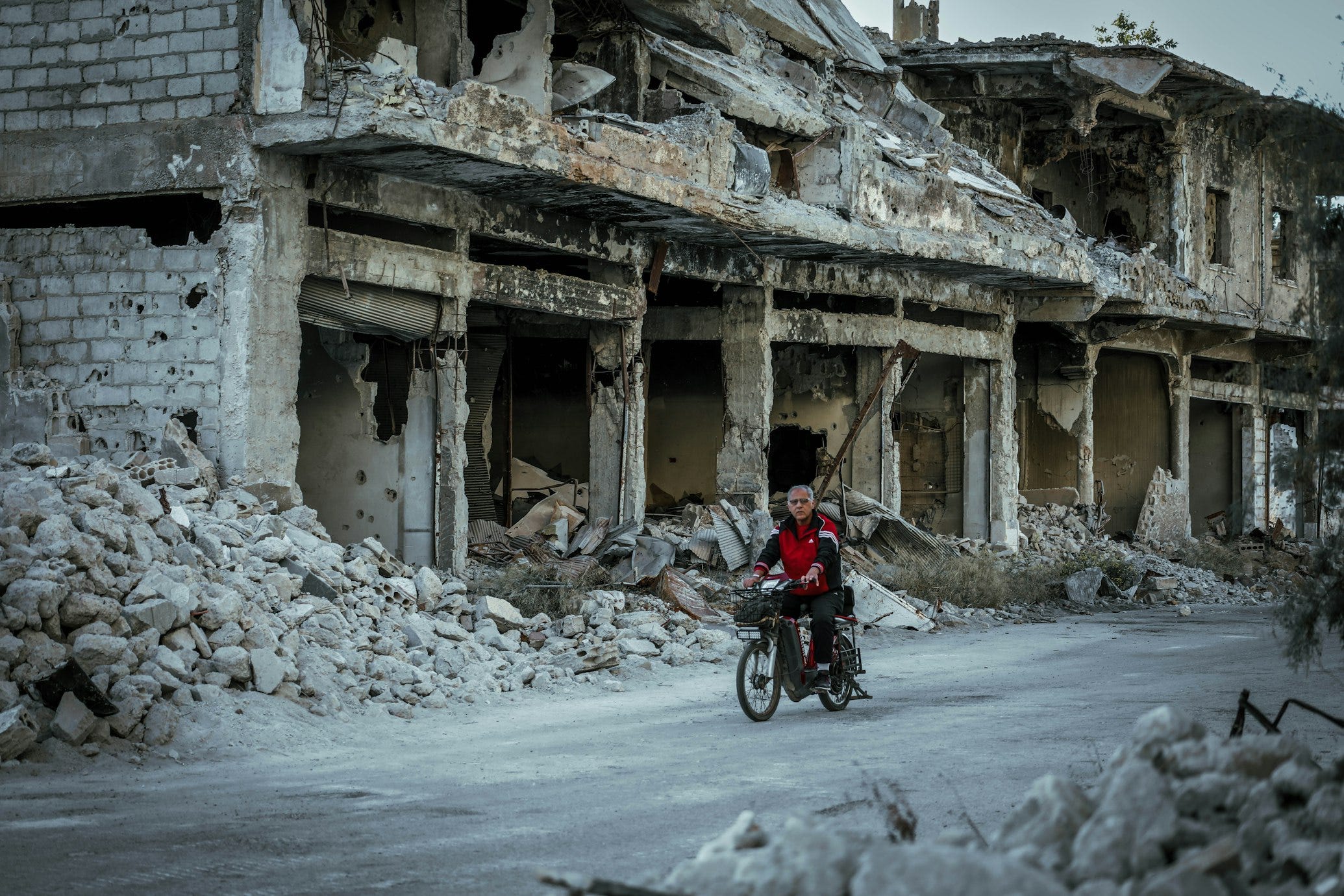
Beginning in 2011, Bashar al-Assad’s government forces surrounded the town, subjecting it to relentless bombing, sniper fire, starvation tactics in a brutal siege that lasted four years. The remaining residents lived among ruins, with scarce food, medicine, and electricity. While most of Daraya’s 80,000 residents fled the area, these young men established their secret library in the basement of a bombed out building — eventually collecting 10,000 volumes to serve the 8,000 residents who remained. (Library, NY Times)
With their schools and public library decimated by the government’s bombardment, the young men daily risked death by stealthily going through the crumbling remains of residences and offices to rescue books that had been left by those escaping the city. Often they would have to make the excursions at night to avoid deadly sniper fire.
The library was kept secret so it would not become a target of the regime. Its location was spread amongst the residents solely by word of mouth. Inside this quiet refuge, shelves lined the walls with novels, philosophy, history, religious works, poetry, and textbooks. Books on Christianity and Judaism were set alongside books on Islam. Even books on marital love-making were available, but these were placed on the top shelves! For the oppressed residents of Daraya, the library became far more than a collection of books—it was a sanctuary from war and a symbol of intellectual freedom in a country long marked by censorship. Anas, one of the library’s founders, boldly declared:
‘We don’t ban any books. We are open to those on all subjects. We believe that by excluding books we do not agree with, we would just be helping to raise ignorance.’
During the worst of al-Assad’s onslaught against Daraya, the library became more than a quiet place to read and check out books. It also became a lecture hall and space for continuing education. Inspired by the young men’s clandestine library, two young women started a primary school to teach the remaining children in Daraya, numbering around seventy between the ages of five and twelve. Often they would have to move the classes into a dark basement during bombardments, but they rarely cancelled school. No student died at school during those four perilous years, but twenty of them perished in their homes from artillery bombardments and sniper fire. Sara, one of the intrepid teachers confessed why she and her associate risked so much to teach the menagerie of students who hailed from Muslim, Alawite, and Christian families:
‘I don’t want this new generation to have their intellectual development held back the way ours was. So I try to teach them to think for themselves and express their own emotions. Since the uprising this is much easier. We are now free to protest against the regime here in Daraya.’ (Thompson, Library)
Love America but hate Americans?
Censorship and the repression of knowledge are never the friends of democracy. In fact, the word democracy originated in 5th century Athens, about the same time Plato was born in that city. It is a compound Greek word made up of demos — “the people” and Kratos — “rule.” Hence, “the people rule” or “people power.” But the people cannot rule the republic if they are uninformed. That is why autocrats, despots, and tyrants always restrict the free flow of information. Think of China’s control of the internet and its battalions of sleuths eavesdropping on its citizens’ electronic correspondence. Far worse is North Korea, “the Hermit Kingdom,” whose people have been cut off from the world’s literature, news, and discourse for the past seventy years. Russia, for its part, has systematically restricted information across the vast country by creating “a sovereign internet,” RuNet, which is designed to disconnect the populace from the global web, enforcing strict censorship and criminalizing dissent. Key measures include blocking Western social media (Facebook, Instagram, Twitter) and news sites, throttling platforms like WhatsApp and Telegram, and penalizing VPN usage. (Putin, Radio Free Europe)
Even here at home, we must consider the president’s manipulation of large media outlets, such as CBS, and his insistence that late night comedians be silenced. Satirists are high on the administration’s target list because they effectively expose the truth about government and politics much more evocatively and memorably than news commentators. Consider the impact of Saturday Night Live skits. Don’t forget that the administration pulled all federal funding — $1.1 billion — for public radio and public television when it dissolved the Corporation for Public Broadcasting, which had helped support public media for a half century. In some states, National Public Radio is the only news source available in rural areas. (Funding Cuts, Common Cause)
Curtailing free speech and open access to information is, at its heart, an attack on freedom. Governments posture that the suppression of knowledge is for our protection. Actually, these actions are meant to control citizens, and “control” is never the same thing as love.
CENSORING ST. PAUL
Introducing Galatians
At its heart, Galatians is about the freedom believers have in Christ and one of the earliest attempts to squash that freedom. The gospel or good news that Paul preached to the Galatians one year before—salvation through the grace of Jesus Christ—was being discredited. The spiritual freedom of believers was in grave danger. False teachers conspired to gain control over the young, impressionable congregation of Gentile Christians. Neither love of God nor love of the people played any part in their efforts.
Paul is furious with the Galatians, but even more so with the shyster teachers who are bewitching them. Paul works hard and risks much to establish the Galatian churches in what is now Central Turkey. The Roman province of Galatia comprised a considerable territory, including the ancient cities of Perga, Pisidian Antioch, Iconium, Lystra, and Derbe. Paul and his stalwart companion Barnabas set out to evangelize this area on their first missionary journey in 48 AD. Amazingly, this is only eighteen years after Christ’s resurrection. I should add here that young John Mark, who will write the earliest Gospel account, initially travels with the duo.
Paul’s disciple, Luke, gives a report on the two’s courageous exploits in Acts 13-14, to include a mob’s attempt to murder Paul by stoning in Lystra (Acts 14:19). In that near fatal episode, the frenzied people stone Paul and drag his limp body out of the city. They suppose he is “stone-cold” dead. However, they no sooner depart than Paul pops back up, wounds and all, and defiantly waltzes back into the city. The next day Barnabas and he begin the walk to Derbe, sixty miles southeast of Lystra, where Paul preaches for as long as a week (14:20-21). Not satisfied with his initial gospel crusade, Paul refuses to take the more reasonable shortcut back to their headquarters in Antioch in Syria. He instead retraces his steps and preaches in the Galatian cities a second time. Also during this return trip, he appoints elders to care for the neophyte congregations, and adds a preaching stop in Perga. Paul did not initially preach in that city because of John Mark’s sudden defection from the crusade. (Acts 14:21-25 & See 13:13).
After completing their 1,400 mile trek, Paul and Barnabas arrive back in Antioch to report the successful planting of the new churches (Acts 14:26-28). No rest is in store for the duo, however, as false Christian teachers arrive in town who demand that male Gentile believers line up to be circumcised, and that all believers, both male and female, must keep the entirety of the Jewish law. This confrontation in Antioch compels Paul and Barnabas to hightail it to Jerusalem, the base camp of both the apostles and the false teachers, to straighten out this matter (Acts 15:1-29). In the end, it is Peter, Paul’s sometime nemesis (See Galatians 2:11-14), who saves the day and declares to the assembly:
‘So why are you now trying to out-god God, loading these new believers down with rules that crushed our ancestors and crushed us, too? Don’t we believe that we are saved because the Master Jesus amazingly and out of sheer generosity moved to save us just as he did those from beyond our nation? So what are we arguing about?’ (Acts 15:10-11, The Message)
It is important that we review these two confrontations with the false Christian teachers in Antioch and Jerusalem because they are part of the same misguided group who arrive in Galatia shortly after Paul and Barnabas depart the region. They convince many in the neophyte church that they must follow the Jewish law in order to be saved — eradicating the Galatians’ newfound freedom through grace and replacing it with a degraded religion based solely on human endeavor. The false teachers’ dubious intent is further magnified by the fact that the Galatian congregations are made up of Gentiles with no connection to Mosaic Law.
Paul is incensed. Less than one year has elapsed since he preached the good news of liberation to the Galatian churches. Unable to immediately repeat the 1,400 mile round trip, Paul sits down and dictates a letter to the churches. It will become the earliest document in the New Testament, will set the table for the four Gospel writers who follow, and will repeatedly correct the trajectory of the Christian church throughout the ensuing ages.
For example, in 1535, eighteen years after he nailed the 95 Theses to the Wittenberg Church door, Martin Luther wrote in his Commentary on Galatians, “To mix law and Gospel not only clouds the knowledge of grace, it cuts out Christ altogether.” Luther realized he was in the same struggle with the church authorities of the late Middle Ages as Paul was with the false teachers of antiquity. Ultimately, Luther’s struggle struck the match of the Reformation and Paul’s ignited the miraculous spread of the church and the compilation of the New Testament.
In our own day, Tim Keller, who died of pancreatic cancer less than three years ago, preached, “Galatians is like a little bomb. There’s dynamite in it. It’s not a very long book, but it brings a big punch… We are more sinful and flawed in ourselves than we ever dared believe, yet at the very same time we are more loved and accepted in Christ than we ever dared to hope.”
Keller realized that 1,977 years after Paul wrote his Letter to the Galatians we need Paul’s message more than ever. Paul knew that he was incurably sick due to his alienation from God until Christ made him well and drew him into the embrace of the Father. From the moment he became aware that Christ healed him, he could not help but tell others the good news of what had happened to him and the grace of God to make everyone well who hears that good news and puts their faith in what Christ has done for them. His adversaries, on the other hand, wanted to silence the telling of that good news and replace it with one centered on human effort, which is no good news at all — but brings about bondage rather than freedom.
All in all, Paul would travel 10,000 miles to share that news. He did it because he loved the people to whom God sent him. His adversaries loved their religion, but not the people. And here we are again. So many Christians aligned with the current administration profess a cultural religion, one based on exercising power, targeting legislation, and ruthless expulsion. Just as there are “people who love America but hate Americans,” there are many who love the Christian religion but despise many other Christians.
SOURCES
“AAUP @ Texas A&M University Condemns Banning of Plato,” AAUP Blog, Jan. 7, 2026. https://aaup-texas.org/blog/f/aaup-texas-am-university-condemns-banning-of-plato#:~:text=(8)
“A book fair in Damascus is a window on the new Syria,” The Economist, Feb. 19, 2026. https://economist.com/middle-east-and-africa/2026/02/19/a-book-fair-in-damascus-is-a-window-on-the-new-syria
Blinder, Alan, “Texas A&M, Under New Curriculum Limits, Warns Professor Not to Teach Plato,” NY Times, Jan. 7, 2026. https://www.nytimes.com/2026/01/07/us/tamu-plato-race-gender.html?
Mikhail, Dunya, “In a Syrian Town Under Siege, a Secret Library Kept Dreams Alive,” New York Times, Sep. 28, 2019. https://www.nytimes.com/2019/09/28/books/review/syrias-secret-library-mike-thomson.html?
Price, Gary, “Report: Texas Schools are Using AI to Screen Library Books Under New State Law,” Library Journal, Oct. 29, 2025. Excerpted from the Austin American-Statesman. https://www.infodocket.com/2025/10/29/report-texas-schools-are-using-ai-to-screen-library-books-under-new-state-law/#:~:text=
“Putin Signs New Measure Tightening FSB Control Over Russian Internet,” Radio Free Europe, Feb. 21, 2026. https://www.rferl.org/a/russia-internet-law-restriction-tech-censorship/33684027.html
“The Impact of Pornography in Children, The American College of Pediatricians, Updated August, 2024. https://acpeds.org/the-impact-of-pornography-on-children/
Thompson, Mike, Syria’s Secret Library, London: W&N Publishers, 2019.
“Trump’s Funding Cuts Are Already Gutting Rural Public Media Stations Across the Country,” Common Cause, Aug. 6, 2025. https://www.commoncause.org/articles/trumps-funding-cuts-are-already-gutting-rural-public-media-stations-across-the-country/
PHOTO CREDITS
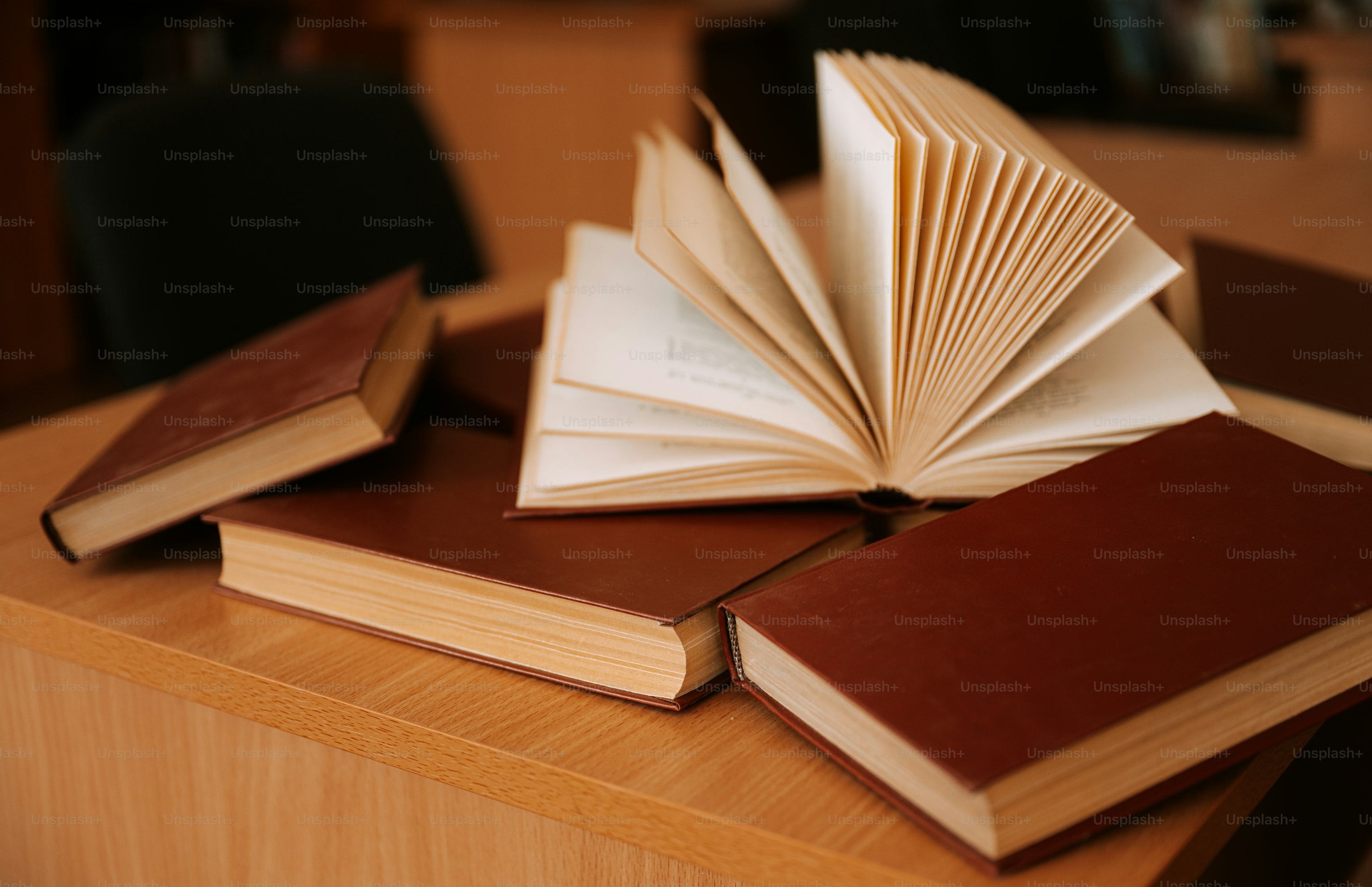
Open and Closed Books, by Kateryna Hliznitsova, from Ukraine
Daraya, Syria, by Mahmoud Sulaiman, Daraya, Syria
Amjad, the 14 Year-Old Head Librarian of Daraya’s Secret Library, by Daraya City Local Council
Are Smartphones Destroying Teen Mental Health?, by Vox
Thanks, Pat. Marthe introduced me to Tim Keller’s GOSPEL IN LIFE podcast a while back, and it has been a blessing. I’m going to look for Keller’s sermon(s) on Galatians.