
From the Ashes
Amos 6-7

Dear Friends of the Pilgrim Letter,
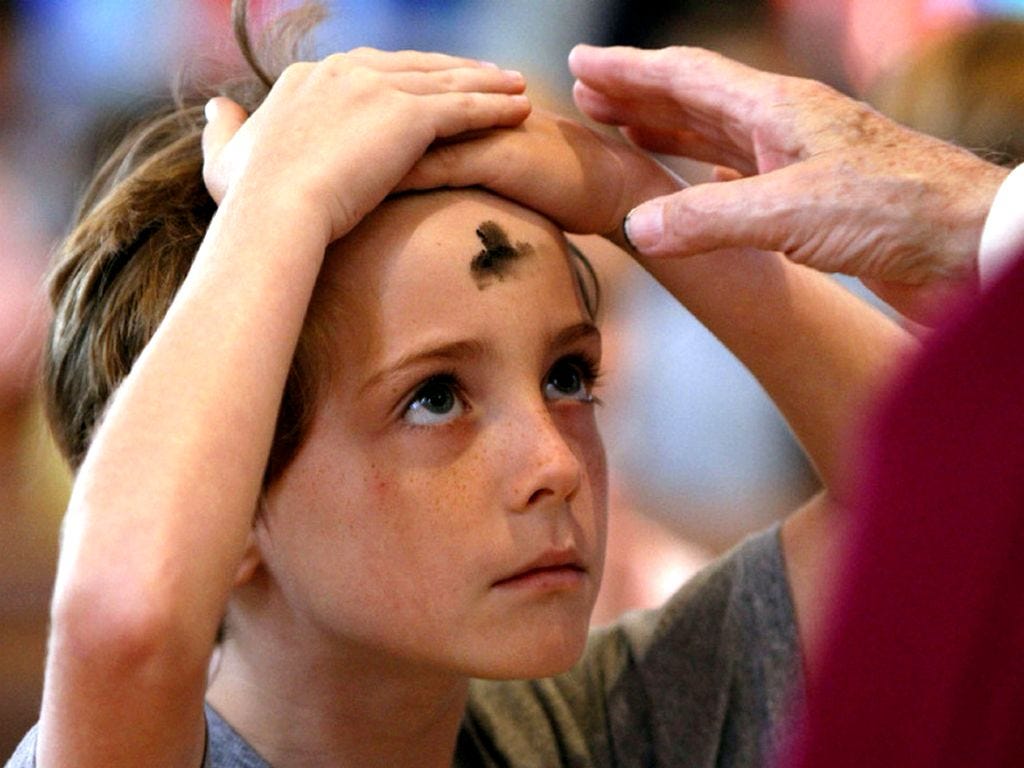
Lent has arrived. So I begin this letter by recalling the first Ash Wednesday service I attended without being cajoled by my mother or grandmother. What began as a cunning scheme to get out of school early, eventually grabbed my eleven-year-old attention once those ashes were smudged across my forehead.
Amos, for his part, furiously tries to grab the attention of the leading citizens of Israel to act justly, especially in defense of the working class. He issues sobering threats and terrifying visions, but nothing seems to work. The elites have walled themselves off from those in need. Amos eventually tells them their fine houses are going to burn down around them, with nothing left to show for their luxurious lifestyle but ashes.
America’s leaders have done much the same as those in Amos’s day. The administration seems more and more walled-off from the needs of the common citizen and instead seeks to fuel the wealth of well-connected developers and well-heeled investors by inviting the contamination of our air and water. We must demand action from the Congress and pray that, like Job, our leaders will one day soon ‘repent in dust and ashes’ (Job 42:6).
May you have a holy Lent, and thank you for joining me on the Greatest Adventure, Patrick+
THE GREAT ASH WEDNESDAY ESCAPE
For Ash Wednesday 1965, I hatched a plan to spring free Charlie Boyd, Gus Costello, and yours truly. I approached my mother on Shrove Tuesday and asked if she would write a note to my teacher requesting that I be allowed to attend the noonday Ash Wednesday service. My mother looked at me with a mixture of delight and befuddlement. Had her 11-year-old been touched by an angel? Miss Lois Harper, on the other hand, my 5th grade teacher and a member of the Mt. Olive Primitive Baptist Church, examined the note and slapped it on her desk with a dismissive “Harrumph.” Birmingham public schools in the 1960’s were unapologetically Protestant Parochial Schools — Baptist outposts of a sort. Just before the Pledge of Allegiance each morning, we stood at rigid attention, as Miss Harper placed an LP recording of her tittering alto voice singing ‘Bless this house O Lord we pray, make it safe by night and day…’ As this was in the days of immediate, incontestable corporal punishment, every student – Jew and Christian alike – sang with bravado.
Having secured their parents’ permissions, as well, Charlie, Gus, and I were released from class at 11:30 AM on Ash Wednesday. Miss Harper could not bring herself to announce our release, so she just pointed at the door, and the three of us were off. We walked out of Shades Cahaba Elementary on East Oxmoor Road and followed the sidewalk for a mile or so to All Saints’ Episcopal on West Hawthorne. We entered the dark, stained-glassed nave at 11:55. On that day, not one whisper could be heard, even though the pews were already full. The three of us, neatly dressed in navy pants and white shirts – making us look like Mormon missionaries – were led to the front row by Mr. Ebaugh, President of Guaranty Savings and Loan. Mr. Ebaugh ushered every service at All Saints’ with the exception of his own burial.
Mr. Abbot, the rector, opened the service with the arresting words from the 1928 Book of Common Prayer, ‘Almighty and everlasting God, who hatest nothing that thou hast made, and dost forgive the sins of all those who are penitent…’ I looked over at my two friends. Charlie Boyd, who never missed a Sunday at Dawson Memorial Southern Baptist, steeled himself for the pagan ritual. He told me later that he imagined we might sacrifice a live cat on the altar, but I told that him we saved that for Palm Sunday. Gus Costello, on the other hand, whose ancestral church was Holy Trinity Greek Orthodox Church, had never attended worship in English, and never one led by an un-bearded priest.
Because we were on the front pew, the three of us knelt, genuflected, and exercised the holiest deportment of our lives. At the imposition of ashes, we three eleven-year-old, sans parents, took a deep breath when the ashes were smudged on our foreheads with the words, ‘Remember you are dust and to dust you shall return.” I was not sure what had just transpired between God and me — but something was up.
True to Mr. Abbott’s form, a former naval commander in WWII’s Pacific Fleet, he took the service from soup to nuts in 24 minutes. Fully ashed and communed, the three of us walked out the heavy oak doors of All Saints’ Church. For the rest of the day, we were completely free to fill our pockets with penny candy at the Phillips 66 station, climb trees at Homewood Park, sneak into the Teen Center to play pool and ping pong, and talk about the inscrutable mysteries of females.
At the time, if we had developed the wherewithal to think about it, we would have realized that we were far freer than that. Repentance is the interstate highway to the free life. Knowing that, Ash Wednesday, and all of Lent, for that matter, is not a time for morose introspection that leads to loathing and despondency but for honest self-examination that leads to illumination and liberation.
This fact is magnified by the fact that today Christians all over the world will receive the imposition of ashes, return to their seats, and then offer with one voice Psalm 51. Considered to be the poem that David penned after he committed adultery with Bathsheba and ordered the murder of her husband, Uriah, the words let us know just how far we human beings can sink (2 Samuel 11:1 - 12:13). ‘I know my transgressions, and my sin is ever before me’ (v.3). We may not be guilty of either one of those two biggies. Nevertheless, we know what it is to be unable to sleep, mix in polite company, pray, or look at ourselves in the mirror because of an unfeeling word we spoke or a cruel action we took that murdered the spirit of someone in our path. This is the worst kind of prison. In utter desperation, we join our words to David’s, ‘Cast me not away from your presence and take not your Holy Spirit from me’ (v.12). We can endure most anything but to be set adrift from God’s presence.
Our remedy is rendered in the last lines of the psalm: ‘The sacrifice of God is a troubled spirit; a broken and contrite heart, O God, you will not despise’ (v.18). Once we are broken open, we can receive what God has for us. These days as I kneel before the altar reciting the psalm, I realize the ashes smudged on our foreheads communicate two vivid truths about human beings: One, we are mortal; this enfleshed life I’ve enjoyed for seventy-one years will end. Two, some things I have said, done, and thought need to burned up and thrown on the ash heap, so I can start afresh with what remains of my life.
Headed to Easter
Lent is the journey from the ash heap to the free life. As early as the 2nd century AD, Lent began as a forty-day preparation for new converts. Those new to the faith, known as catechumens, were baptized on Easter Day, the only day many of those early Christian communities administered baptism. This practice was ratified by the Council of Nicaea in 325 AD. However, it took the tireless innovator, Pope Gregory I, “Gregory the Great,” (pope: 590-604) to formalize the season. Setting Ash Wednesday at the beginning of Lent, he extended the season to forty-six days, which includes Sundays, which are never considered fast days. More importantly, Gregory directed all Christians, not just the catechumens preparing for baptism, to join in the six weeks of preparation and self-examination for Easter.
Curiously, Lent was not the original title for the season. Quadragesima, meaning “fortieth” was it’s Latin title until the Middle Ages. As nation states began to emphasize the use of their native languages, the term Lent was adopted, which is taken from Old English lencten, meaning “spring or the lengthening of days.” As spring signals a renewal of the earth, Lent stirs believers to expand or lengthen their spirits to be able to receive the miracle of Christ’s resurrection. Pope Gregory likened Lent to Jesus’ time in the wilderness. Through fasting and isolation, Jesus looked solely to the Father for his strength and was steeled to resist the Devil’s expeditious enticements. Above all, Jesus would not be detoured from the journey to his crucifixion and resurrection. We emulate Jesus by undertaking our own forty days of preparation, where we deny ourselves comforts, such as alcohol, fatty foods, and sugar, that can anesthetize our physical and spiritual sensitivities. At the same time, we undertake practices, such as prayer, Bible reading, and acts of mercy and justice, which draw us closer to Christ.
We begin Lent with ashes, the incineration of those past words, deeds, and thoughts that we have carried around for long enough. Those ashes, more airy than a feather, are blown away and forgotten, just as God had repeatedly promised, ‘I will remember your sins no more’ (Isaiah 43:25; Jeremiah 31:34; Hebrews 8:12, 10:17). On Ash Wednesday, we become lighter and more able to make the forty day journey.

WHEN YOUR HOUSE BURNS DOWN AROUND YOU
Amos 6:1-14
Ashes accompany the horrifying prophecy in Amos 6. Retreating to their luxurious mansions in Samaria, feasting on veal and lamb, drinking wine by the bowlful, the leading citizens of Israel have insulated themselves from the needs of the rank and file populace. They are indifferent to the growing injustice in the land. Because of their heartless blindness, the wealthy are complicit in the spiraling denigration of the citizens in Israel’s capital city.
Therefore, Amos announces the harrowing words of the LORD, ‘I am giving your city and everything in it to the enemy that approaches.’ Amos paints a future picture of Israel in the aftermath of the Assyrian Army’s onslaught: the complete destruction of the capital city Samaria. Mansions either collapse from the bombardment or burned to to the ground — the latter is more likely. Family members arrive at one of those once fine houses to collect the lifeless bodies for burial. Huddled in one of the closets, they are surprised to find someone still living and even more taken aback when that lone survivor whispers, ‘Please don’t raise your voices and, by all means, do not mention the Name of the LORD. You might arouse Him to mete out more destruction upon us.’
Amos ends the chapter with a strange riddle. Standing at the gate of the city, he asks the leading citizens if they can see how foolish they are to defy the LORD’s persistent commands to care for the poor and demand justice to those unable to stand up for themselves.
Do you hold a horse race in a field of rocks?
Do you plow the sea with oxen?
You’d cripple the horses
and drown the oxen.
And yet you’ve made a shambles of justice,
a bloated corpse of righteousness,
Bragging of your trivial pursuits,
beating up on the weak and crowing, “Look what I’ve done!”
Enjoy it while you can, you Israelites.
I’ve got a pagan army on the move against you. Amos 6:12-14 Message
Plagued with Trouble
Amos 7:1-7
In Chapter 7, Amos shares three of God’s five visions of judgment with the people. As can be predicted, the visions are disturbing. In the first, Amos describes a plague of locusts devouring Israel’s second crop of hay. The king and the elites have already reaped the first harvest and are sitting pretty. The working class citizens will bear the brunt of the infestation when the second harvest is destroyed. Quite unexpectedly, Amos pleads with the LORD, ‘Don’t let this happen to the little people. They are too weak to recover.’ The LORD concedes. The plague of the locusts is withdrawn.
Next, Amos describes an out-of-control wildfire that will completely devour Israel like a terrible rising ocean in a tsunami. Recall the pictures of the nightmarish Los Angeles wildfires in January 2025. Again, Amos begs the LORD to revoke this plague, and the LORD, a second time, concedes.
The third plague is quite different from the first two. Amos is shown a plumb line, a simple carpenter’s tool that uses gravity to test whether a wall is straight. The LORD then declares, ‘I have hung this plumb line in the midst of the people, and I have found that they are way out of line. I will not relent again. The crooked house of Israel is coming crashing down upon their heads. The LORD’s disgust is particularly directed at Israel’s fraudulent practices of worship and the king’s unconscionable reign.

The Nation Vs. The Lord
Amos 7:10-17
Israel’s elites have heard enough. Amaziah, the Senior Priest of the National Shrine at Bethel, reports Amos’s latest rant to King Jeroboam. ‘Boss, he says you are going to die in battle and the entire population will be captured and herded into exile.’ We can assume the king dispatched Amaziah to get rid of the pesky prophet. Approaching Amos, Amaziah attempts removing him through insults, ‘Go back down south where you belong. Let your handlers down there supply your next paycheck.’ Unfazed, Amos retorts, ‘I’m not paid for this. I don’t even aspire to be a prophet. Heck, I’m a rancher. But the LORD commanded me to come up here and give you a piece of His mind.’ Amaziah should have exited while he had a chance, because the prophet’s personal message from God to him is chilling:
‘Your wife will become a whore in town.
Your children will get killed.
Your land will be auctioned off.
You will die homeless and friendless.
And Israel will be hauled off to exile, far from home.’ Amos 7:17 Message
FAR FROM THE FUMING CLOUD
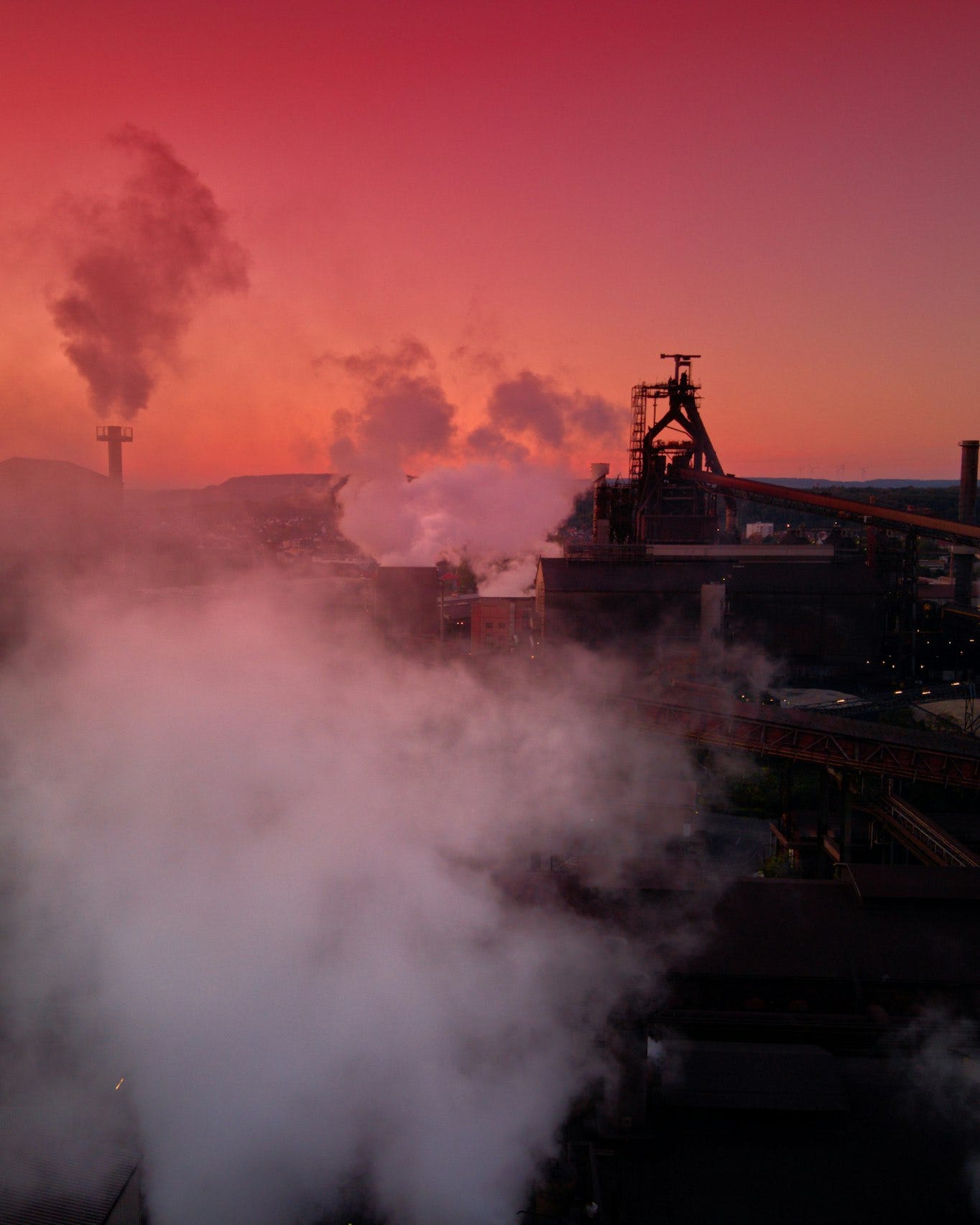
We are living in a modern day rendition of Amos’s Israel, where federal leaders, walled-off from the realities of life for the common citizens, dispassionately concoct every manner of injustice against them. Nowhere is this better seen than in the administration’s reckless — if not terrifying — destruction of clean air and water protections. The United States is suffering a barrage of these short-sighted actions; thus, I will attempt to list a sample of them along with linked citations for further study:
1. 66 Coal Plants Exempted from Clean Air Regulations — In April 2025, coal plants were no longer required to reduce emissions of toxic chemicals such as mercury, arsenic, and benzene. These plants extend from Colstip, Montana, to Coal Creek Station, North Dakota, to Oak Grove, Texas. Those three plants, in particular, are major polluters. Breathing in mercury, arsenic, and benzene cause severe neurological damage, cancer, respiratory diseases, and cardiovascular issues. Lest we Texans feel out of harms way, the Oak Grove Coal Plant is in Richardson Country, just 50 miles southeast of Waco, and its pollutants are easily carried on the wind to Austin and San Antonio. (Trump Exempts Coal Plants, AP) & (Impacts of Electric Power Sector, EPA).
2. Weakened or Rescinded Methane Emissions from Oil and Gas — Since January 2025, the administration allows increased methane emissions from the oil and gas industry. The non-partisan Institute for Policy Integrity estimates this change will result in an increase of 7,461 new cases of child asthma, an increase of 3,922 hospital admissions or emergency room visits, nearly 140,000 days of missed work, and the possible expenditure of $21 billion in health costs. Texas leads the list of states that will be most adversely affected by this change, followed by North Dakota, Oklahoma, West Virginia, and Louisiana. (Tracking the Damages, Policy Integrity)
3. Lifting Protections for Many American Waterways — The administration is drastically narrowing the definition of rivers, streams, and wetlands that will be protected in the United States. This means a large swath of the nation’s waters will no longer be safeguarded from agricultural and industrial pollutants. By the new definition, only 2.4% of wetlands in Arizona would be protected and only 5% in Iowa. With roughly 81% of Texas wetlands now exempt from federal permits, developers and industrial projects in Texas can often dredge or fill these areas without the lengthy federal review process previously required. While this reduces “red tape” for construction and agriculture, environmental groups warn it significantly increases the risk of flooding in areas like Harris County, where wetlands act as vital sponges for storm surges. Texas is home to over 7 million acres of wetlands, and no alternative legal protections exist. (U.S. Wetlands Protection, E & E News) (Wetlands, Bayou Waterkeeper)
4. Repeal of the 2009 Endangerment Finding — The most sweeping anti-environmental action by the administration to date is the repeal of the Endangerment Finding. Based on extensive scientific and health research, the 2009 finding clearly established that six key greenhouse gases (GHGs)—including carbon dioxide, methane, nitrous oxide, hydrofluorocarbons, perfluorocarbons, and sulfur hexafluoride —threaten public health and welfare, establishing the legal foundation for regulating climate pollution under the Clean Air Act. It concluded that atmospheric concentrations of these gases endanger current and future generations. The impact of repealing the Endangerment Finding on American citizens will be profound, as all emissions standards from U.S. automobiles and trucks have been erased. “The U.S. no longer has emission standards of any meaning,” said Margo T. Oge, who served as the E.P.A.’s top vehicle emissions regulator under three presidents. “Nothing. Zero,” she added. “Not many countries have zero.” (No Clean-Air Rules, NY Times)
Wake Up and Smell the Benzine
The administration sells these repeals and rollbacks as economic savings for the American people, when, in reality, these changes will dramatically drive up health costs and thereby raise insurance premiums. With this draconian decline in clean air and water, American’s quality of life will significantly decrease. Children and the elderly will bear the worst of the environmental consequences with soaring new cases of asthma and other respiratory diseases in coming months. It is a fact that 50% of emissions from industrial plants travel 400 miles or more from their source. (Downwind, Grist)
Those making these decisions along with those ratifying them are often protected from the immediate fallout of their actions by escaping to their golf resorts, mountain retreats, and beach hideaways…that is until the day they realize they are living downwind and downstream of their deeds. What’s more, the hypocrisy of trumpeting “Make America Healthy Again,” while simultaneously filling the air and water with toxic pollutants is downright diabolical.
Discussing this with my wife, she reminded me of the most memorable scene in the March 2000 film Erin Brockovich. Julia Roberts plays the lead as a research assistant for a down-and-out plaintiff’s attorney, played by Albert Finney. The two are representing the people of Hinkley, California, who have experienced soaring cancer rates due to high volumes of the toxic pollutant hexavalent chromium running off as waste water from the local Pacific Gas and Electric Company (PG&E) power plant. In the scene, Brockovich urges an aggressive, pitiless lawyer representing PG&E to drink the glass of water in front of her, saying, “We brought that water in special for you. It’s from a Hinkley well.” The defense attorney’s eyes open wide with terror as she freezes with the glass to her lips. She sets the glass back on the table and sternly announces, “This meeting is over!” Actually, PG&E’s case had just gone up in flames and turned to ashes.
SOURCES
Begert, Blanca, “Coal plant pollution can be deadly — even hundreds of miles downwind,” Grist, Feb. 27, 2023. https://grist.org/climate-energy/coal-plant-pollution-can-be-deadly-even-hundreds-of-miles-downwind/#:~:text=
“Human Health & Environmental Impacts of the Electric Power Sector, EPA, Dec. 12, 2025. https://share.google/FVbUhXwlU43MhfKUW
Daly, Matthew, “Trump exempts nearly 70 coal plants from Biden-era rule on mercury and other toxic pollution,” AP, Apr.15, 2025. https://apnews.com/article/trump-coal-power-plants-epa-exemptions-zeldin-2cd9f2697b5f46a88ab9882ab6fd1641
Tabuchi, Hiroko, “With Latest Rollback, the U.S. Essentially Has No Clean-Car Rules,” New York Times, Feb. 16, 2026. https://www.nytimes.com/2026/02/16/climate/endangerment-finding-auto-emissions-regulations.html?
“Tracking the Damages of Regulatory Rollback,” Policy Integrity, Feb. 13, 2026. https://policyintegrity.org/tracking-regulatory-rollbacks?utm_source=chatgpt.com
“Two years after Sackett, fewer wetlands are protected. We need local and state solutions,” Bayou City Waterkeeper, Mar. 27, 2025. https://bayoucitywaterkeeper.org/two-years-after-sackett-fewer-wetlands-are-protected-we-need-local-solutions/#
Wilson, Miranda, “Trump plan waives protection for 80% of U.S. Wetlands,” Energy & environment News, Nov.17, 2025. https://www.eenews.net/articles/trump-plan-waives-protection-at-80-of-wetlands/#:~:text=
PHOTO CREDITS
Child receiving imposition of ashes on Ash Wednesday, Photo compliments of Paul Burkhart, The Long Way Home
Young man reading the Bible, Photo compliments of Dwell With Christ
Plague of locusts in Kenya in 2020, Photo compliments of National Geographic
Industrial plant spewing pollution, Photo compliments of Alexander Psiuk
As always and with every one of you writings, I am thankful for you and your words. What a time we are living in. Apparently we have forgotten what the USA looked like prior to the bills that cleaned our air/rivers.
Thanks, Pat, for this Lenten encouragement.