
Early Winter Books
Last Minute Christmas Gifts


Dear Friends of the Pilgrim Letter,
Today is Kay’s birthday, a big one — her 70th, and I have enjoyed surprising her throughout the day with gifts I squirreled away. If you can believe it, Kay still has the first birthday gift I gave her, a gold painted papier mâché angel. It was for her…11th birthday! (You can see a photo of the angel gift at the end of the Letter.)
On the subject of gift giving, we are coming down to the wire on our Christmas shopping. A book or two from my recent reads may be the perfect gift for one of your loved ones.
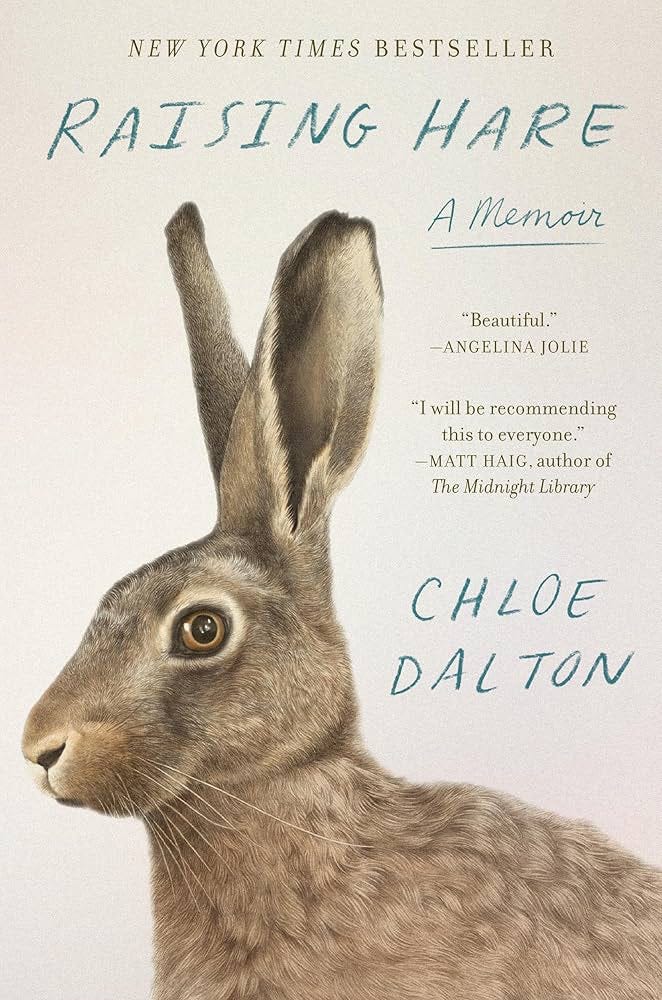
I enjoyed each one of these books. The surprise crowd pleaser in the bunch is ‘Raising Hare.’ The memoir takes place during the pandemic and shows what can happen when we slow down and allow ourselves to love and care for another being. This book is the perfect gift for most anyone on your list. For the person trying to make sense of authoritarian politics sweeping across Western democracies, Zakaria’s ‘Age of Revolutions’ takes the long view of history that most of us have forgotten or never knew. Richard Rohr’s ‘The Tears of Things’ is a great find for the religious-minded. After reading it, I have a much greater understanding of the messages of the mysterious Hebrew prophets. Ian McEwan’s nineteenth novel, ‘What We Can Know,’ is as inventive as it is disturbing. The author of ‘Atonement’ never backs away from creatively engaging our present culture with a good story. For Christians who have reached their limit of the grim apocalyptic, Sarah Clarkson’s ‘This Beautiful Truth’ is hopeful and restorative. ‘Darwin,” by the eminent English historian Paul Johnson is a short biography of one of the most enlightening, controversial, and misunderstood scientists of the modern age. Finally, John Muir’s ‘A Thousand Mile Walk’ reacquaints the reader with the majesty of America, while revealing the scars stretched across the post-Civil War South.
One of these seven selections may be the just the right gift for one of those ‘hard-to-buy-for’ individuals on your Christmas list, and the book will be enjoyed long after the tree has been taken down.
Thank you for joining me on the Great Adventure, Patrick
Raising Hare: A Memoir, by Chloe Dalton
Chloe Dalton is accustomed to frequenting the halls of power, traveling the globe, and being invited into nations’ capitals. She is not accustomed to inhabiting an isolated farm house and rambling around the acres of forests and fields surrounding it. Covid-19, however, relegated her to the latter. Returning from a hike one day during the early days of the pandemic, she discovers a leveret, an infant hare. Tiny enough to fit in the palm of her hand and therefore doomed to be supper for an owl, fox, or stoat, she wraps the leveret in a cloth and brings it in to her home to save it — or so she thinks. The local veterinarian as well as a respected wildlife expert, warn her that the hare will not survive in her home. Furthermore, if she handles it, the hare will never be accepted back in the wild. Undaunted, Dalton proceeds. The result is a nature memoir that would make Jane Goodall smile!
The memoir begins with Dalton’s discovery of the leveret in February 2021 and chronicles the three years that follow. Much of the book discloses the scrupulous care she gives the hare — to include her missteps as well as her small victories. Dalton, to her credit, refuses to domesticate the hare (substantiated by her refusal to give it a name), and her determination to return it to the wild never falters. A trusting bond develops between the two of them, yet the hare, true to its nature, spends most of its nights well beyond the confines of Dalton’s farmhouse. It returns during the day to sleep in preparation for its nocturnal ventures.
Liaisons may be a better description than “ventures,” for the big surprise in the memoir is the hare is not an “it” or a “he,” but a “she.” The hare’s first litter of three leverets is delivered in a bedroom of the farmhouse. During her three years with the hare, Dalton catches sight of three litters, but she suspects there were more. Her descriptions of the ever-changing appearances of the hares is captivating, in that we are given a view of God’s intricate evolutionary protection of His creatures. In the end, Dalton admits that she did not tame the hare, but the hare changed her.
‘Since that first day when I found her, I felt as if a spell was cast over this corner of the earth, and me, and me within it. I have stepped out of my usual life and had the privilege of an experience out of the ordinary. Had it not been for the unique circumstances of the pandemic, I would never have come across the hare, and my life would have continued along its familiar grooves.’
I should add here that a college professor friend gave me this book to soothe my wounded spirit after the sudden death of our 43-year-old daughter. The day I finished Raising Hare I wrote to thank him. The book lifted me out of my own “familiar grooves” and set me on the higher ground of hope.
Age of Revolutions: Progress and Backlash from 1600 to the Present, by Fareed Zakaria
“Start at the ending,” my new friend told me when he handed me Zakaria’s book. Confused, I asked him what he meant, “Start with the Conclusion, The Infinite Abyss, and then read the rest if you like.” I proceeded to read Zacharia’s concluding essay three times and listened to it a fourth time on audio with my wife.
Zakaria’s vivid historical examination mesmerized me, as his analysis applies to our intractable political and cultural situation in the United States today. For me, it was as if someone finally turned the lights on. In The Infinite Abyss, Zakaria reveals the source of our pain and unrest: The Liberal Global Order, which arose after WW II and was vaunted by Ronald Reagan and Margaret Thatcher, gave us free trade, collective security, the promotion of democracy, and universal human rights. At the same time, it isolated many individuals and entire communities. Their sense of place, tradition, and meaning were seemingly sacrificed on the altar of progress. According to Zakaria, the task for our present leaders is to preserve advances in science, trade, international understanding, and human rights without exercising intolerant, autocratic models of the past and without alienating large swaths of the population.
Zakaria’s sweeping conclusion compelled me to read the entire volume from the beginning. He, again, surprised me with the historical revolutions he chose to survey. To my surprise, he first examines The Netherlands in the 16th and 17th centuries as the first nation to adopt modern commerce, decentralize institutions, and exercise cultural, ethnic, and religious tolerance. The Netherlands then exported their advances to England during the Glorious Revolution of the late 17th century. When William of Orange crossed the North Sea and peacefully took the throne of England, his adopted country quickly embraced The Netherlands’s innovations and significantly expanded them for the Empire on which “the sun never sets.” Zacharia next turns to the French Revolution of 1789-1799, not to showcase its advances but expose its glaring failures. Rather than originating from merchants and civic leaders, the French Revolution was orchestrated from the top-down. The result was cultural and political rigidity which eventually erupted into widespread violence.
Zacharia’s “Mother of All Revolutions” is the industrialization of Britain from 1760-1840. For all its problems pointed out by Dickens and Marx, Britain’s Industrial Revolution brought about a meteoric rise in living standards and advanced the nation technologically, economically, and socially. The United States followed its Mother country with its own industrial revolutions — the first from 1790-1860 and the second from 1870-1914. Steam power and the mechanized manufacture of textiles characterized the first and the second was fueled by steel production, electrification, and assembly line operations.
By intricately presenting the progression of economic and social revolutions that preceded us, Zakaria is able to describe the revolutions we are experiencing now in technology, communications, and globalization. The backlash from these advances includes identity politics, politicized religion, racial and ethnic discrimination, and regional unrest. In the face of this considerable pushback, Zakaria ends on a inspirational note:
‘The greatest challenge remains to infuse that journey (we are on) with moral meaning, to imbue it with the sense of pride and purpose that religion once did — to fill that hole in the heart.’
Based on our revolutionary world history, that may be a tall order!
The Tears of Things: Prophetic Wisdom for an Age of Outrage, by Richard Rohr
Stumbling upon the book in a hip, secular, boutique bookstore, I opened it and thumbed a few pages to read Rohr’s words, “The prophets offer a path for compassionate living in our own age of intense outrage and political division.” I was sold, and for the last several weeks, I have let Rohr lead me through a fresh reading of the prophets Amos, Jeremiah, Isaiah, and Ezekiel. Rohr also adds Job, John the Baptist, and Jesus to his list of Biblical prophetic witnesses. The prophets’ ultimate goal is to move God’s people away from our divisive dualism characterized by “good guys, bad guys, rewards, and punishments” to a faith based on God’s unconditional, unitive love. Isaiah unveils the radically hopeful message of the prophets in this way: ‘See, I am doing a new thing! Now it springs up; do you not perceive it? I am making a way in the wilderness and streams in the wasteland’ (Isaiah 43:19).
Rohr is not so naive to suggest that the prophets or we transcend our dualistic notions about our faith and the world all at once. Rather, he describes the essential journey of the prophets in three arduous stages: Order, Disorder, and Reorder. The first stage, Order, is characterized by anger. The prophet sees himself as the protector of the ancient faith and sets himself against those who are trespassing against its laws, traditions, worship, and societal norms. He is a dualist, seeing the world in terms of good actors and bad ones. Hosea voices this first stage of anger in his denouncement of Israel: ‘But the people of Israel have bitterly provoked the Lord, so their Lord will now sentence them to death in payment for their sins’ (Hosea 12:14).
In the second stage, Disorder, the prophet’s rock solid convictions begin to crumble. His anger has done nothing to heal the world, only add fuel to the fire. Acknowledging this, the prophet becomes vulnerable and begins to grieve. He quits ranting and begins to shed tears over the state of his world. Jeremiah, known to some as the “weeping prophet,” tearfully admits his former worldview has been shattered: ‘O Lord, you deceived me when you promised me your help. I have to give them your messages because you are stronger than I am, but now I am the laughingstock of the city, mocked by all’ (Jeremiah 20:7)
The prophet enters the third stage, Reorder, only after descending into the pain and chaos of Disorder. He does not merely return to the certainty of his former state — Order, but, transcending his previous fears, arrives at a new understanding of God’s unconditional love for the world He has made. This new understanding propels the prophet to work for the common good of his people. Isaiah speaks to this stage using the radical reordering of creation inaugurated by the promised Messiah: ‘In that day the wolf and the lamb will lie down together, and the leopard and goats will be at peace. Calves and fat cattle will be safe among lions, and a little child shall lead them all’ (Isaiah 11:6).
Of course, Rohr is suggesting the path of the prophets is the path mapped out for every Christian and Jew. Most of us begin at some literal, straight-jacketed understanding of our faith, which is often essential in the beginning years. As we grow, we begin to see the limitations of our former “God-view.” Indeed, in those early days, we most often remake God in our own small image. When the allure of reward and the threat of punishment are removed, what remains is the opportunity to live by grace—an unconditional, free gift. Only then can we find out if our love for God is genuine or merely a means to an end.
What We Can Know, by Ian McEwan
I was a chapter into What We Can Know before I realized that the United Kingdom had become a series of islands — a version of Hawaii on the North Sea. The author, Ian McEwan, a master of understatement, only gradually orients the reader to the timeframe of the novel, 2119. While the protagonist, Tom Metcalfe, is an literary scholar, whose conversations with his fellow intellectuals are laced with esoteric academic concerns, you very slowly learn the horrific facts sounded during our present century. Oblivious to climate warnings, the oceans have dramatically risen, submerging cities and entire nations. A limited nuclear war killed millions. As a result, some former nations, such as the United States, are embroiled in regional conflicts led by charismatic warlords — reminiscent of Afghanistan. Citizens across the remaining world refer to those of us of the 21st century as “the Derangement,” for we knew the challenges besetting us, but we ignored them.
Metcalfe, for his part, rarely speaks of “the Derangment” or the “Inundation.” He is fixated, almost possessed, with finding a legendary poem written in 2014. The poem, “A Corona for Vivian,” was written by Francis Blundy for his wife. A corona, which is an intricately designed poem consisting of seven linked sonnets with linked themes and repeated lines, seems a pedantic pursuit amid the remnant of world destruction. The pursuit is fraught with physical challenges, as well. Oxford, for instance, is under water, entire libraries have been moved to higher ground, and travel, even from England to Scotland, entails days of sailing. Nevertheless, as Metcalfe’s pursuit intensifies, the poem discloses a calculated crime committed by the Blundys, which is set against the backdrop of larger crimes of world leaders of that time.
McEwan, author of Atonement and other celebrated novels, has been nominated for the coveted Booker Prize eight times and won it once for Amsterdam in 1998. He is quite unafraid to wade into national and world politics. The title of this latest book, What We Can Know, pushes the reader to consider what we can truly learn from the past that might save us from repeating the same mistakes. On the other hand, McEwan presses us to consider how our generation will be viewed by those who will follow us. Presently, the outlook is hardly promising.
This Beautiful Truth, by Sarah Clarkson
At age 17, as Clarkson began to realize she had a particularly oppressive form of Obsessive-Compulsive Disorder (OCD), an internally aggressive mental illness. At that time, she fatalistically wrote in her journal:
‘There will be no end to this.
There is no hope.
You can’t bear this much longer.
What then?’ I shivered convulsively, afraid to answer.
Her answer arrived in a photograph of Vedran Smailovic, the Cellist of Sarajevo, dressed in a tuxedo and playing in a bomb crater during the Siege of Sarajevo (April 1992 - February 1996). Beneath the photograph was a caption from Fyodor Dostoevsky that read “Beauty will save the world.” The words of the revered 19th century Russian novelist attributed to the brave actions of the 20th century Bosnian musician began Clarkson’s healing from her terrifying thoughts, depression, and isolation. A devoted Christian, Clarkson describes how the photograph and quotation reoriented her faith:
Beauty is at the heart of our faith. The Christian gospel is not of an abstract salvation known by doctrine alone, but the coming of divine beauty itself in to our injured flesh, the realm of time and space where the bent world groans for healing.
Raised by devout, loving Christian missionary parents, Clarkson did not find solace in the well-meaning, repeated answers from them, her pastors, or her peers. Doctrinal certainty did not assuage her struggle. However, beauty as expressed in nature, art, heroic deeds, and especially in literary works by authors such as J.R.R. Tolkien, Madeleine L’Engle, C.S. Lewis, Marilynne Robinson, George Eliot, Michael O’Brien, and above all Wendell Berry, swept her away from her torment to a place of peace. A deeper truth was communicated to her as it had been voiced to Augustine 1,500 years before. Augustine, Clarkson notes, “called the created world, a book written, not with ink, but the stuff of the cosmos, with everything in it reflecting, and revealing the mind of its Creator.”
At times, the ten chapters of Clarkson’s book read more like poetry than prose. She shares personal episodes of her struggle with OCD — some of them excruciating, followed by incursions of beauty and hope. What makes her memoir so helpful is her honesty that hits most Christians, even the most devout and mature, where they live. At the same time, Clarkson sees beauty moving people of faith to act decisively, like the Cellist of Sarajevo:
‘The beauty that breaks into our darkness is not a passive Grace that falls away from us once we’ve been propped up and patted on the back. The beauty is living, a person reaching out to us in hands clothed in the very stuff of our mortality, and it restores us not to passive ease, but to active creativity, to the generative love that is at the heart of the Trinity.’
A curious fact is that I did not order this book, nor did I find it at a Christian bookstore. No, I pulled it off the shelf of the biography section at the San Antonio Public Library. Clarkson’s memoir seemed to be lying in wait for a person in need of her message.
Darwin: Portrait of a Genius, by Paul Johnson
Growing up in Birmingham, Alabama in the 1960s, Charles Darwin’s name was tossed out with villains the likes of Nikita Khrushchev, the First Secretary of the Communist Party of the Soviet Union from 1953 to 1964, and Madalyn Murray O’Hair, the outspoken American atheist made famous by Life magazine. Darwin, for his part, was vilified for his supposed theory that human beings descended from apes...but he never wrote that. On the other hand, his celebrated English biographer, Paul Johnson, insists Darwin’s groundbreaking work, Origin of Species, left him open to that criticism.
Although the term “genetics” was not used until the English biologist William Bateson coined the word in 1905 twenty-three years after Darwin’s death, it is indisputable that Charles Darwin was endowed with exceptional genes. His genius was built upon that of his two grandfathers. On his paternal side was the noted physician Erasmus Darwin, who, between 1794-96, wrote the two-volume work Zoonomia. The text dealt extensively with human anatomy, pathology, and psychology. Furthermore, Erasmus Darwin introduced early ideas about evolution in that work.
Charles Darwin’s grandfather on his maternal side, Josiah Wedgwood, was equally brilliant. Wedgwood achieved worldwide fame and earned a fortune in profits by revolutionizing the manufacture and distribution of ceramics. He took a sleepy, local pottery business and turned it into the leading manufacturer of plates, cups, pots, and assorted dinnerware. At the same time, he greatly improved the functionality and dependability of his company’s goods — tea pot lids that fitted perfectly, pitchers that did not drip, etc... “Wedgewood” became known for both quantity and quality, a rare achievement.
Two men, with whom Darwin associated, not by blood, but through science, also changed the course of his life. The first was the chemist Joseph Priestly (1733-1804). Priestly published over 150 scientific works during his lifetime. He discovered oxygen, carbon monoxide, and ten other gases unknown at the time. While his scientific discoveries were lauded, his political views of support for both the American and French Revolutions and his criticism of the Church of England recorded in his book, The Story of the Corruptions of Christianity, stoked anger in the populace. In 1791, a church mob torched his house and lab in Birmingham, England. Priestly was so traumatized by the attack that he moved his family to the United States. Because of Priestly’s experience, Darwin retained a fear of Christian mobs throughout his life.
No one, other than his wife Emma, exercised more influence on Darwin that Charles Lyell (1797-1875). Lyell is best known for his foundational work in modern geology, the three volume Principles of Geology. Lyell theorized that the same, observable natural processes that shape the Earth today, like erosion and volcanic activity, also shaped it in the past over long periods. In other words, the earth is far, far older than people inferred from the Bible. His work greatly influenced Charles Darwin and established the importance of geological time in understanding the history of both Earth and life. Darwin took the first volume of Lyell’s Principles on his five-year voyage on the Beagle. I should add here that Lyell’s work moved many more people around the world toward the principles of evolution than did Darwin’s Origin of Species.
Without question, Darwin’s five-year voyage (1831–1836) on the HMS Beagle, as the ship’s naturalist, became the seminal event leading to his theory of evolution by natural selection. The invitation to serve on the Beagle was extended through Darwin’s friend and former mentor at Cambridge University, Professor John Stevens Henslow, who taught botany and mineralogy. Subsequently, Darwin spent three and a third years on land during that time, mostly in South America. He intensified his habits of careful examination while studying and classifying the unique flora and fauna he encountered. On the Galápagos Islands, he disclosed his well-known study known as “Darwin’s Finches.” Across the thirteen islands, Darwin discovered eighteen varieties of finches. On each island, finches developed distinctive beaks in order to eat the nuts and berries found at their specific locale. The basis for his theory of “natural selection” emerged from these birds and other animal adaptations he discovered there. Darwin was only twenty-seven years old when he returned to England.
Curiously, it took Darwin twenty-five more years to write his foundational text. He was continuously sidetracked into other exhaustive studies. For instance, he spent eight years studying the intricacies of barnacles. He would have procrastinated further if he had not received an unexpected manuscript from Alfred Russel Wallace, a younger naturalist working in the Malay Archipelago. Wallace’s essay outlined the mechanism of natural selection—essentially the same theory Darwin had kept private for 20 years. Wallace’s manuscript, along with repeated, urgent prodding by Charles Lyell, spurred Darwin to set aside his intention to write a “big book” for the scientific community and instead write one for the general public. The Origin of Species ended up being about the length of Jane Austen’s Emma and Charles Dicken’s Great Expectations and the first printing in England sold out on the first day and the second printing sold out in a few day’s time.
While writing in clear, accessible prose, Darwin introduced his concept of Natural Selection using the familiar practice of breeding of domestic animals like pigeons and dogs. This analogy made the process of evolution comprehensible to everyday readers. Furthermore, the book ignited immense public interest because its core tenets of common descent and species transformation directly challenged the prevailing Christian worldview. This sparked a profound philosophical and religious debate throughout Victorian society — on both sides of the Atlantic.
The Origin of Species catapulted Darwin to world fame. Twelve years later he would publish The Descent of Man, and Selection in Relation to Sex, which would not be as warmly received. In the text, Darwin asserted that human beings evolved from lower forms in the same way as other species. Johnson concludes that while Darwin was an able biologist, he was a poor anthropologist. When it came to humans his methods became superficial, biased, and unscientific.
Unfortunately, Darwin’s reputation was further degraded by his supposed association with eugenics, the belief and practice of attempting to improve the human species’ genetic quality through selective breeding. Francis Galton, Darwin’s genius younger cousin and a celebrated statistician, coined the term eugenics in 1883. He was heavily inspired by Darwin’s On the Origin of Species and sought to apply the principles of artificial selection to human society. Darwin never supported the Eugenics Movement, which discouraged procreation amongst mentally ill and “less-desirables” in society. Nevertheless, when eugenics reached its acme in Hitler’s 1933 announcement of the Law for the Prevention of Offspring with Hereditary Diseases, fifty-one years after Darwin’s death, his name became indelibly associated with it. To have his name connected to the barbarism of the Third Reich was far worse than intimating humans are descended somehow from apes.
A Thousand Mile Walk to the Gulf, by John Muir
Two years ago, I bought this book because it is one of those American classics I should read. The book languished on a living room shelf since the day Amazon dutifully delivered it. Then one evening in desperation for a measure of good news at bedtime, I fetched the small volume. By page two, I realized I was joining the celebrated “Father of America’s National Parks” on a spiritual journey.
Temporarily blinded in both eyes in a factory accident, Muir sets out on his thousand mile hike as soon as he could see again. Essentially, he declares that life is too short to spend it imprisoned between four walls. His route takes him through Kentucky, Tennessee, a portion of North Carolina, Georgia, and Florida. He terms his trek a “botanical journey” to seek “the wildest, leafiest, and least trodden way south.” Shunning improved roads and marked paths, Muir navigates solely by compass for much of his journey. His writing is so vivid that the reader feels like she is struggling through the thick underbrush, swamps, and briars alongside him. Even given those obstacles, Muir averaged twenty-five miles per day and sometimes as many as forty. He sets out from Louisville, KY on September 2, 1867 and arrives at Cedar Key, Florida in late October of that same year.
Although, Muir declared his walk a “botanical journey,” he was making his way through the South merely two and a half years after the end of the Civil War. The poverty and the backwardness of the South in comparison to the northern states at that time was alarming. He records the immense disparity in an early journal entry:
There is scarce a trace of that restless spirit of speculation and invention so characteristic of the North. But one way of doing things obtains here, as if laws had been passed making attempts at improvement a crime. This is the most primitive country I have seen, primitive in everything. The remotest parts of Wisconsin are far in advance of the mountain regions of Tennessee and North Carolina.
At the same time, Muir notes that the thick green flora of the South was quickly covering the scars of the hundreds of battles fought there. He tried to lodge with the people along his route, black or white, whenever he was invited to do so. Most shared their meager fare of beans, cornbread, and buttermilk and their simple shelter out of the rain and beyond the attack of mosquitoes. On the rare occasion that a wealthier citizen gave him dinner and a bed for the night, he steered clear of political discussions.
He reached Savannah, GA, the 700 mile mark, in only thirty-eight days. However, he could not move on because he was awaiting a small money parcel from his brother. Because no one offered him hospitality, he made his bed in Bonaventure Cemetery. He “camped amongst the tombs,” most comfortably, as he described it. However, he contracted malaria during the several nights he spent there. By the time he reached Cedar Key, in the “Big Bend” of Florida’s Gulf coast, Muir’s fever spiked. He fainted while walking along the coastline and lost consciousness. A local landowner and sawmill operator took him in and for three months time nursed him back to health. Realizing that he almost died, Muir knew he could not continue walking south, so he took a ship to Cuba instead, where he spent a month investigating the thick, distinctive flora surrounding Havana. Still feverish, he did not have the strength to explore the Cuban jungle as he would have liked.
Muir’s travelogue continues with a brief account of his voyage to New York and his subsequent voyage to Panama, San Francisco, and his final arrival in Yosemite Valley. The last part of his memoir is actually taken from his collected letters.
The most surprising aspect of Muir’s reflections is his near rapturous reports of the landscapes he surveys in the South and later in Cuba, Panama, and Yosemite. Raised in a strict Calvinistic home, Muir was forced by his father to memorize the entire New Testament — word for word. He later escaped the confines of his fundamentalistic religion, yet he retained the enchantment of faith. Cresting a peak in the Cumberland Mountains of Tennessee, he wrote:
Oh, these forest gardens of our Father! What perfection, what divinity, in their architecture! What simplicity and mysterious complexity of detail! Who shall read the teaching of these sylvan pages, the glad brotherhood of rills that sing in the valleys, and all the happy creatures that dwell in them under the tender keeping of a Father’s care?
And finally reaching the Sierra Nevada mountains, he ends his journal ecstatically:
Their spiritual power and the goodness of the sky make them near, as a circle of friends...You bathe in these spirit beams, turning round and round, as if warming at a campfire. Presently, you lose consciousness of your own separate existence: you blend with the landscape, and become part and parcel of nature.
Muir married Louisa, known as “Louie” Strentzel in 1880 and settled in Martinez, California, on the south side of the Carquinez Strait in the San Francisco Bay Area. From there he traveled extensively, visiting Alaska on several occasions. He never stopped advocating for protecting the Sierra Nevadas and other unique environments on behalf of the American People. Muir founded the Sierra Club in 1892 and served as its president until he died in 1914.
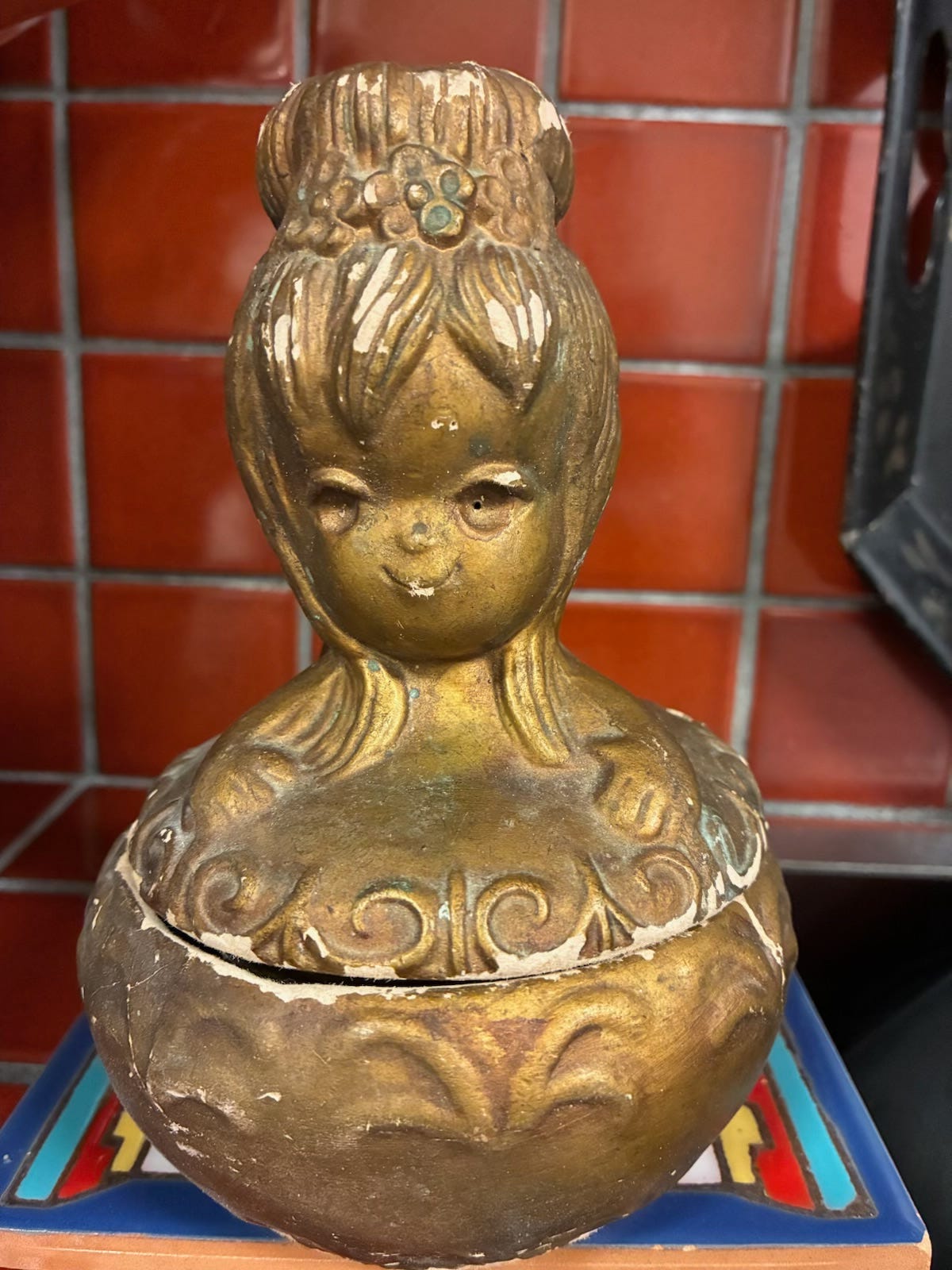
PHOTO CREDITS
Girl reading book under Christmas tree, Tatjana Dimovska
Kay’s 11th birthday gift from Patrick, Kay Gahan
These recommendations are gifts in themselves, Pat. Thanks so much. I’m particularly eager to read Muir’s A THOUSAND MILE WALK having heard much about Muir’s championing the National Parks over the years but realizing I don’t know much about the man at all. You’ve encouraged my love of travel literature over the years (I’m thinking fondly of Fermor and Dervla Murphy, but I have to admit that the controversies surrounding THE SALT PATH and THREE CUPS OF TEA have made me a little bit more cautious. Was it Mark Twain who, when asked about the veracity of his accounts, said “Well, if it didn’t happen exactly that way, it should have”?). Best wishes to you and Kay for a joyous Christmas and a blessed New Year.