
Bait & Switch
Amos 8 & 9

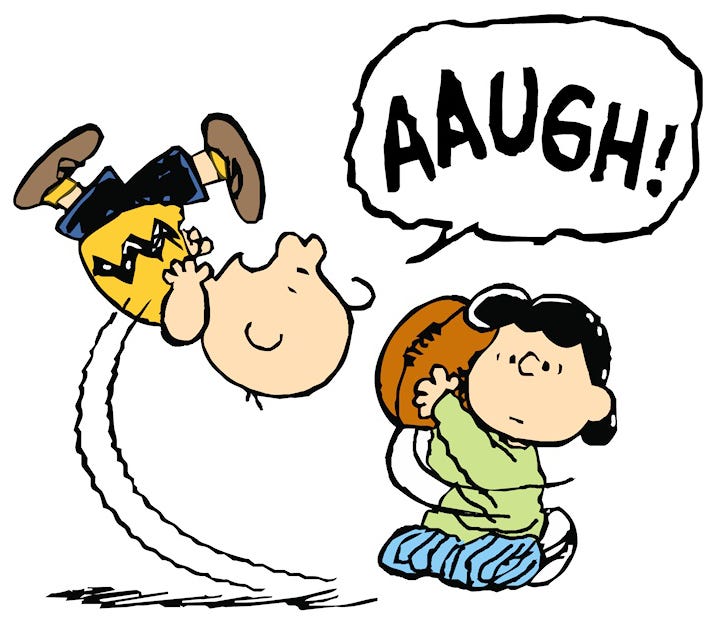
Dear Friends of the Pilgrim Letter,
Mainstream media, Twitter, Blue Sky, Google, public media, and Facebook are flooding us with reports and opinions about the Supreme Court’s tariff decision and the president’s explosive response. Quieter voices on both sides of the aisle have stepped away from the fray to tell Americans that the tariffs, though promised to bring financial relief to the U.S, have not made a dent in our $38.7 trillion national debt. Put in layman’s terms that’s a shared American debt of $113,000 per every citizen. Instead, the hundreds of billions in tariff revenue have only served to offset spending. At the same time, we are learning the hard way that U.S. importers and customers bear 80-90% of the cost of tariffs. Go no further than the supermarket, Amazon, Walmart, or Target to experience that fact.
The administration’s tariffs are no more than a classic ‘bait and switch’ operation. While we were ‘baited” with promises of ‘liberation,’ instead we are swamped by national debt, suffer higher prizes on food and household necessities, and endure the consternation our international neighbors. The ‘switch’ was on, and the American people were easy marks.
In this week’s Letter, I discuss a much more insidious and destructive ‘bait and switch’ scheme of the administration that threatens to silence us and hearkens a significant departure from the gospel of our Lord Jesus Christ. James Talarico, the bold Texas State Representative, unequivocally reveals two ‘bait and switch’ efforts of the administration in his interview with Stephen Colbert. Every Christian, regardless of affiliation, should take notice.
We’ll begin with a few laughs, as I introduce you to my most colorful childhood villain. (Please excuse the ethnic insensitivity of my 1960’s youth.)
As always, thank you for joining me on the Greatest Adventure, Patrick

ARCH VILLAIN
No wrongdoer, no malefactor, no miscreant scumbag fired my middle school heart with more loathing than Tojo Yamamoto, the vile professional wrestler. All of us at Homewood Junior High had fathers, uncles, and neighbors who returned two decades earlier from the battlefields of WWII, and many fought in the Pacific. Tojo Yamamoto, whose real name was Harold Watanabe, capitalized on our darkest conceptions of the war by anointing himself Admiral Yamamoto, IJN (Imperial Japanese Navy)…think Pearl Harbor. In the National Wrestling Association, he was known as a “heel,” that is one who incites the anger and disgust of the audience. The Von Brauners, who made up a “heel” tag team, relished fomenting the ire of the wrestling crowds by wearing Nazi Iron Crosses during their matches. The Sputnik Masked Men would show up in their flaming yellow and USSR-red masks. One look at the duo and the hometown crowd would break out in deafening boos.
Of course, the heels’ job was to fill seats at the National Wrestling Association matches on Saturday nights at the Boutwell Municipal Auditorium in downtown Birmingham. Clips of Tojo baiting good-guy wrestlers would appear during commercial breaks of our afternoon cartoon show Cousin Cliff. After seeing two or three of these clips, kids all over the city were begging their parents to attend the match on Saturday night. I never got the invitation, but I would have jumped at the chance. I would have given most anything for Tojo to get his just desserts.
Occasionally, I would stay up late enough to catch a televised match. From the late 1950’s until 1962, Channel 13, WAPI, televised matches beginning at 10:30 PM. Promoters Nick Gulas and Roy Welch provided the ringside commentary. Starting in 1965, the CBS affiliate Channel 42, WBMG, started broadcasting in Birmingham, giving the city a glut of three television stations. They immediately added Live Studio Wrestling to their schedule. Sterling Brewer became the well-known voice of Birmingham wrestling, and Powderly Auto Sales and Epp’s Jewelers were longtime sponsors of the broadcasts.
Funny, none of us, not even the most naive of my friends, thought these wrestling matches were real. Like the cartoons we relished, these wrestlers were slapstick comedians. How different they were from the Ultimate Fighting Championships (UFC) we see today, where the violence is nearly pornographic in content. Nevertheless, that old time wrestling crew, telecast in grainy black and white, put on a good show for pre-teen boys. Tojo could rile us into a lather. Not too long ago, the legendary Hulk Hogan confessed that on one occasion “Tojo hit me in the throat with his cheap shot, I fell through the ropes...(onto the floor). He then grabbed a cigar out of a guy’s mouth and dropped it in my boot.” Those were the antics that kept us glued to our monochrome RCA’s.
Tojo knew how to raise the temperature in the auditorium and keep it that way. His most effective tactic was his bait and switch. Webster defines bait and switch as “advertising goods which are an apparent bargain, with the intention of substituting inferior or more expensive goods.” In pro wrestling, the strategy takes a nastier turn. One wrestler feigns defeat and the desire for friendship, only to slam his opponent the moment his guard is down. The bait is the offer of friendship and a truce. The switch is the unexpected pummeling that follows. Tojo was a master of this dastardly move. His favorite mark was Ronaldo Leonard Rositani, or, as we all knew and loved him in Birmingham — Len Rossi. He was a handsome, muscularly sculpted Italian with a mane of thick dark hair. In other words, he cut an exact opposite profile from Tojo, who was round faced, corpulent, and bald. We adored Len Rossi. He was our Lone Ranger in tights. Yet over and over again, Tojo, flat on the mat or escaping the ring in fear, would bait Rossi to his side with a gesture of defeat or friendship. Then, all at once, the switch was on. All manner of Nipponese furor would be visited on the chiseled face and wavy dark locks of Rossi’s head. The crazy thing is that not only did Rossi repeatedly fall for Toyo’s well-rehearsed scheme, we did too.
A WOLF IN BELTWAY CLOTHING
Who’s cancelling now?
Last Tuesday, February 17, CBS attempted to block Stephen Colbert’s late night television interview with Texas State Representative James Talarico. Not to be deterred, Colbert conducted the interview with Talarico after Tuesday’s airing of The Late Show with Stephen Colbert and released it to the general public on YouTube. Three days later, 5 million people had watched the interview, whereas Colbert’s late night show averages 3.61 million viewers. That’s a boost of 1.39 million viewers. Add to that, Talarico’s campaign for senate added 2.5 million dollars in donations during the first day of the YouTube video’s release. (Talarico, Houston PBS)
Rather than trumpet his twist of good fortune of garnering the interview, Talarico immediately expressed concern to Colbert over the Trump administration’s continual bait and switch practices targeting the American people. Instead of ending the “cancel culture” as they promised, Talarico commented, the administration and the Republican Party have grossly extended its bias. Talarico declared to Colbert that the American people did not get what they voted for.:
‘This is the party that ran against cancel culture, and now they’re trying to control what we watch, what we say, what we read. And this is the most dangerous kind of cancel culture, the kind that comes from the top. They went after The View because I went on there. They went after Jimmy Kimmel for telling a joke they didn’t like. They went after you for telling the truth about Paramount’s bribe to Donald Trump.’ (Colbert/Talarico, YouTube)
Culture bait
Talarico went on to insist that the most consequential tactic the administration is using is the culture wars. They use hot button cultural issues as bait to distract citizens from the real meat and potato issues. Donald Trump was elected to secure the southern border and to make goods and services more affordable for working Americans. While he has succeeded in the first, the American people are unhappy with the out-of-control gestapo operations exercised by Homeland Security — especially as witnessed in Minneapolis. Regarding the second issue, affordability, the administration has largely ignored it and occasionally ridiculed the need. Instead of delivering their economic promises, the White House has deftly executed a switch by stoking the fires of fear over DEI, college curricula, transgender care and rights, voting abuses, and abortion. Whipping its base into bouts of fury, the administration goes merrily on its way rewarding the very rich while ignoring the issues affecting working Americans. Talarico went as far as to accuse the administration of being like any other bait and switch scam artists. They get their “mark” — in this case the 349 million American citizens — to look the other way while they rob them of economic fairness and opportunity:
‘There is a point to this (the administration’s) craziness. They want us talking about Furries and bathrooms. So, we don’t realize that they are picking our pockets, that they are closing our schools, they are gutting our health care, and they are raising taxes on all of us while they cut taxes for their billionaire donors. The culture wars are a smoke screen because the real fight in this country is not left versus right, it’s top versus bottom.’
At most every speaking engagement or interview, the young congressman restates the bedrock deception advanced by MAGA leaders: Christian Nationalism. The bait that the administration offers to evangelical churches dotted across the American landscape are cultural promises — anti-gay, anti-abortion, anti-trans, anti-woke, anti-immigrant and pro-gun rights. The switch, of course, is that none of these causes — whether one judges them good or bad — hit anywhere close to the heart of the gospel of Jesus Christ. The heart of the gospel is found in John’s simple, yet incisive words: ‘Let us love one another, because love is from God; everyone who loves is born of God and knows God. Whoever does not love does not know God, for God is love’ (1 John 4:7-8). Or, reminiscent of our summers singing our hearts out at Vacation Bible School: Red and yellow, black, and white, they are precious in his sight.
Talarico, for his part, fiercely renounces the empty religious appeals of the administration by flatly stating, “There is nothing Christian about Christian Nationalism. It is the worship of power—political power, social power, economic power—in the name of Christ.” The ultimate spiritual authority of Jesus Christ is diluted by overarching demands of the state. Jesus demands humility, care for the poor, generosity, and justice. Those bedrock gospel principals find no place in the administration’s goals and rhetoric. (Talarico’s alternative, The Intelligencer)
‘I think in our (Christian) faith that we’ve got to get back to those fundamentals. My granddad was a Baptist preacher in South Texas. And when I was little, he told me that Christianity is a simple religion. Not an easy religion, he would always clarify, but a simple religion because Jesus gave us two commandments. Love God and love neighbor. And there was no exception to that second commandment. Love thy neighbor regardless of race or gender or sexual orientation or immigration status or religious affiliation.’
Compare Talarico’s remarks to the bellicose comments of the White House’s Homeland Security Advisor, Stephen Miller to CNN’s Jake Tapper on January 7. To many, Miller’s comments sound clear-eyed and highly rational. To the mature Christian, however, his words sound like those of Emperor Nero or Josef Stalin:
“The future of the free world, Jake, depends on America being able to assert ourselves and our interests without apology. We live in a world, in the real world, Jake, that is governed by strength, that is governed by force, that is governed by power,” he said. “These are the iron laws of the world since the beginning of time.’ (Miller’s arguments, Newsday)
Contrasting Talarico’s comments to Stephen Colbert with Miller’s to Jake Tapper set a stark decision before every American Christian — evangelical, Roman Catholic, Orthodox, Anglican, or mainline Protestant. Will we follow Christ and his gospel forged by his love demonstrated on Calvary’s cross or will we take the bait and be drawn into a false gospel driven by power and division? Once we’ve made the switch, many will find they’ve been robbed of the joy, peace, and freedom we once knew in Christ. That’s a terrible price to pay for being played.
“There is nothing Christian about Christian Nationalism. It is the worship of power—political power, social power, economic power—in the name of Christ.”
JUSTICE IS NO SIDELINE FOR THE LORD
Amos 8:1-14
A bait and switch scam pulled on the little guy
Citizens are always easy marks by those in power. Amos insists working class Israelites are being played, which is contrary to God’s stern guidance for the nation as written in the Torah (Exodus 22:21-24). God desires justice for those on the lower rungs of the economic ladder. Unfortunately, the LORD of hosts, the commander of the angel armies, has looked upon the Northern Kingdom of Israel and judged them guilty of intentionally exploiting the weakest in the realm. Amos insists that the LORD who judges them is no tribal God, nor is He some Canaanite fertility deity. The LORD who judges is Israel is sovereign over every nation and all creation, and He can depose any king or prelate. Amaziah, the Chief Priest of Bethel, and Jeroboam II, the King of Israel are soon to be unseated (Amos 7:9, 17). Amos’s message significantly contributes to the gospel message. Look no further than Mary’s Song in Luke 1:46-55, or to Jesus’ mission statement delivered in his hometown found in Luke 4:18-19, or to Jesus’ description of the final judgment in Matthew 25:31-46. Dr. Carol Dempsey, a Dominican nun and professor of Biblical studies at the University of Portland in Oregon, writes, “Amos’s portrayal of God is disturbing, but from a metaphorical perspective, the description is effective in a time when political, social, and religious leaders were amassing more and more power and wealth at the expense of the poor.” American Christians must ask the question, are we once again living in such a time. (Dempsey, Collegeville Commentary)
As Chapter 8 opens, Israel’s businessmen are all set to exercise their ancient version of the bait and switch. Amos begins the chapter by describing an ominous vision the LORD has given him. The vision consists of summer fruit, which is a homonym in Hebrew for the end. Israel’s bloody end is near. Why? Because they trample on the needy and destroy the poor in the most insidious ways. First of all, the character of the businessmen is revealed in their eagerness for the Sabbath or some other religious festival to be over so they can get on with selling their grain. But the business owners do not deal fairly with the working class. They manipulate the scales to benefit themselves. Far worse, they bait the poorest customers with promises of bargain grain prices, when, in reality, the owners switch out the good grain and sell them the pitiful sweepings of the harvest instead. This is detestable on two counts. For one, the customers are getting a lesser product than advertised. For another, the Torah forbids selling the gleanings of the wheat. That part of the harvest should have been left on the fields for the poor to gather at no cost (Leviticus 19:9-10; 23:22). The owners’ disregard, if not disdain, for Israel’s spiritual life is showing up in their daily actions.

Finally, these loathsome businessmen think nothing of taking advantage of those poor who have fallen into penury. They simply buy the individuals as slaves and then traffic them for profit. Amos declares that not a single one of their miscreant deeds goes unnoticed by the LORD, for He is sending an earthquake, famine, and a terrifying eclipse as a sign of His judgment upon Israel’s leading citizens that this is, indeed, the end. ‘I will make it like the time of mourning for an only child,’ says the LORD, ‘and in Israel the only sound will be that of bitter weeping.’
The worst part of God’s execution of judgment against Israel will not be the losing of their ill-gained wealth or the lack of food and water. The worst will be a famine for the word from the LORD that they will experience. This is an interesting turn around for the elites. Since they cared nothing about participating in worship on the Sabbath and on holy days, they will now experience nothing but silence from the LORD. Amos describes the people staggering from sea to sea and wandering from north to east in search of the word of the LORD. In other words, the people have been rendered rudderless and aimless without God’s direction. It seems the LORD has pulled a much more surprising and painful switch on them!
Amos 9:1-10
Nowhere to hide
Many recall hearing the comforting words of Psalm 139 read at a Christian burial. Verses 7-10 are particularly consoling:
Where can I go from your spirit?
Or where can I flee from your presence?
If I ascend to heaven, you are there;
if I make my bed in Sheol, you are there.
If I take the wings of the morning
and settle at the farthest limits of the sea,
even there your hand shall lead me,
and your right hand shall hold me fast.
Many recall hearing the comforting words of Psalm 139 read at a Christian burial. Verses 7-10 are particularly consoling:
The psalm must have already been in circulation during Amos’s time because he reverses David’s beatific lyrics to deliver a scathing sentence to Israel. Chapter 9 begins with Amos’s final vision. He sees the LORD standing beside the altar; however, the Hebrew may better be translated the LORD was standing on top of the altar at Bethel, which was King Jeroboam’s personal sanctuary. The vision of the LORD perched atop the altar begs the discomfiting question: Who is the real King of Israel? The LORD’s presence shakes the shrine’s threshold to the point that it nearly collapses. Amos then voices the LORD’s vengeance reversing the familiar, formerly comforting, imagery from Psalm 139:
Not one of them shall flee away,
not one of them shall escape.
Though they dig into Sheol,
from there shall my hand take them;
though they climb up to heaven,
from there I will bring them down.
Though they hide themselves on the top of Carmel,
from there I will search out and take them;
and though they hide from my sight at the bottom of the sea,
there I will command the sea-serpent, and it shall bite them.
And though they go into captivity in front of their enemies,
there I will command the sword, and it shall kill them;
and I will fix my eyes on them
for harm and not for good. (Amos 9:1-4)
Amos 9:11-14
Grace is the final word
Amos’s prophecies leave ancient Israel and the modern reader 2,800 years later breathless and hopeless. Blood is smeared all across the pages of the book, and the screams of Israel leap from the print. Then, with no introduction, Amos voices God’s reprieve. Israel will suffer judgment. They will experience a devastating defeat and those who are not killed will be scattered across the Mediterranean at the hands of the Assyrians. Nevertheless, in God’s time Israel will be restored and the nation will be far more glorious than before. The unified, expansive kingdom of David, Israel’s past salad days, will be reestablished. What’s more, the land will become become so rich and fertile that it will rival the Garden of Eden. No sooner will the farmers harvest the land than a plow will ready the same field for the next crop. Such overlapping, lavish fecundity will appear supernatural. The LORD declares, ‘Things will be happening so fast that your head will swim, one thing fast on the heels of the other. You won’t be able to keep up. Everything will be happening at once—and everywhere you look, blessings! Blessings like wine pouring off the mountains and hills. I’ll make everything right again for my people Israel’ (Amos 9:13-15 Message)
Amos is not the sole prophet who ends his message with words of miraculous hope. Isaiah concludes with a vision of a new heaven and and new earth where future Israelites will reside (Isaiah 66:22-24). Jeremiah issues God’s new covenant where He will put His law within them and write across the people’s hearts (Jeremiah 31:31-34). Ezekiel, the anchor of the big three prophets, promises Israel a heart transplant, ‘A new heart I will give you, and new spirit I will put within you; and I will take out your heart of stone…’ (Ezekiel 36:26). Micah, a contemporary of Isaiah in the Southern Kingdom of Judah, ends his prophecy with a word of forgiveness, ‘The LORD does not retain his anger for ever, because He delights in steadfast love…He will tread our imperious iniquities under foot and cast our sins into the depths of the sea’ (Micah 7:18b-19). The Judean blue blood prophet Zephaniah rants about religious perversions in the three chapters of his short book, yet he ends with a blissful picture of the battered people of Jerusalem returning home: ‘I will save the lame and gather the outcast, and I will change their shame into praise and renown in all the earth. At that time, I will bing you home’ (Zephaniah 3:19b-20a). Joel, who prophesied in Judah well after both the Assyrian and Babylonian invasions, offered a word of hope after the land was ravaged by a devastating locust infestation that led to famine and despair across the land: ‘So that you shall know that the LORD shall dwell in Zion…the mountains shall drip sweet wine, and the hills flow with milk, and all the stream beds of Judah shall flow with water…’ (Joel 3:17-18). Malachi claims the final message of the prophets. Indeed, he has the last word of the entire Old Testament, and he extends the greatest hope of all: ‘The Lord of hosts says that for you who fear my Name the sun of righteousness shall rise, with healing in his wings. You will then go forth like calves from the stall’ (Malachi 4:2). The promise of Jesus Christ rises from the page.
I conclude our study of Amos with these words of future hope to encourage you to continue your reading of the Hebrew prophets. At times, these ancient voices from the 8th to the 4th centuries BC seem to be speaking directly to America today. That’s because they are. God’s word is timeless. Yet the prophets circle back to the same bedrock Biblical truth. Neither the nation nor the powerful have the final word. God does.
SOURCES
Adkison, Michael, “Senate candidate James Talarico raises $2.5 million after Stephen Colbert interview controversy, campaign says,” Houston, PBS, February 18, 2026. https://www.houstonpublicmedia.org/articles/news/politics/2026/02/18/543768/james-talarico-raised-2-5-million-stephen-colbert-interview-controversy-jasmine-crockett/
Colbert, Stephen, “Rep. James Talarico On Confronting Christian Nationalism, And Strange Days In The Texas Legislature,” Feb. 17, 2026.
Dempsey, Carol J., “Amos, Hosea, Micah, Nahum, Zephaniah, Habakkuk,” New Collegeville Bible Commentary, Collegeville, MN: Liturgical Press, 2013.
Kilgore, Ed, “Talarico’s Alternative to the MAGA Conquest of Christianity,” The Intelligencer, Feb.18, 2026. https://nymag.com/intelligencer/article/talarico-hegseth-maga-american-christianity.html
“In his own words: Stephen Miller’s arguments for White House actions in US cities and abroad,” Newsday, Jan. 14, 2026. https://www.newsday.com/news/nation/stephen-miller-venezuela-greenland-minneapolis-s76978
PHOTO CREDITS
Charilie Brown and Lucy, Photo by Charles M. Schulz and compliments of LinkedIn
Tojo Yamamoto, Photo compliments of Pro Wrestling Wiki Fandom
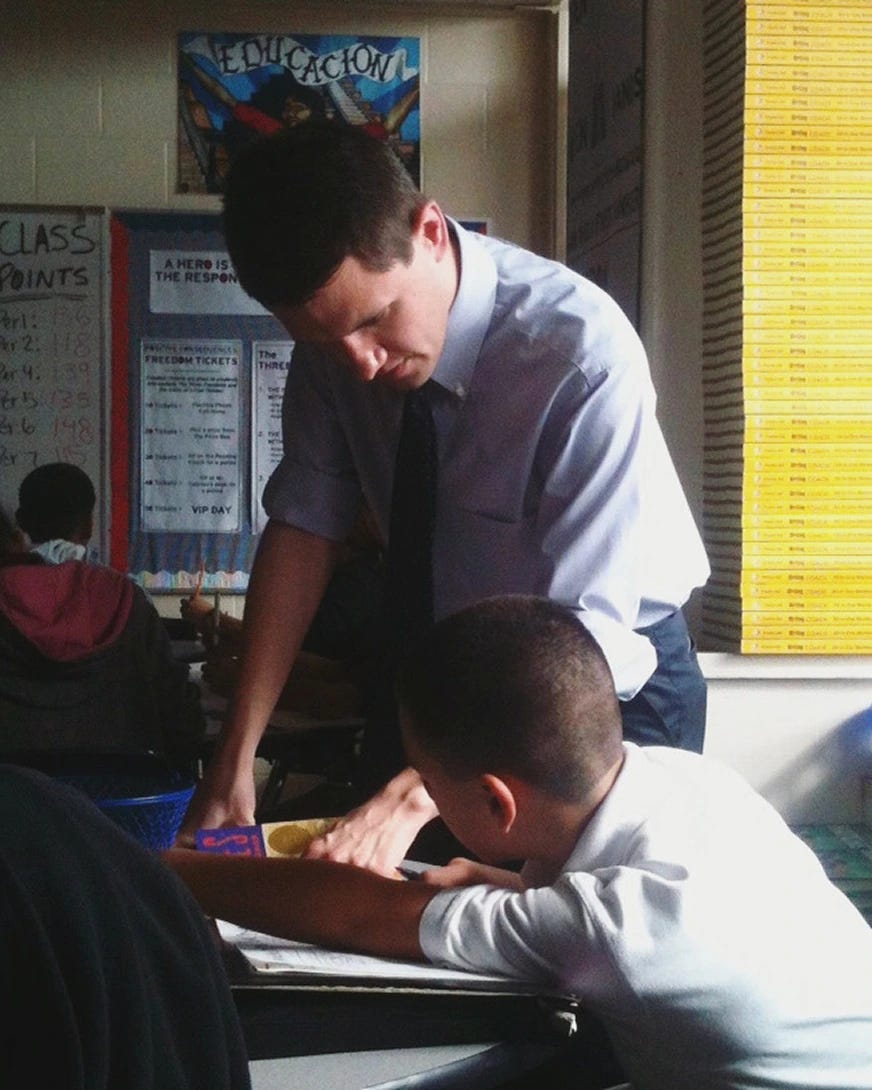
James Talarico, Middle School Teacher, Photo taken at Rhodes Middle School, San Antonio, Texas (West Side) — an underserved school in a low-income area
Gathering the Gleanings of Wheat, by Arthur Hughes, 1856